Basketball Physiotherapy.
The physical demands of basketball
Basketball is a sport of explosive vertical jumping, rapid multidirectional movement, repeated sprinting and deceleration, physical contact and the sustained high-intensity demands of games played on hard court surfaces. The combination of hard court, high jumping volumes, contact sport elements and the specific overhead demands of shooting and rebounding creates a distinctive injury profile — one of the highest rates of ankle and knee injury of any team sport, alongside significant finger, hand and shoulder presentations from ball handling and physical contact.
At Articulate Physiotherapy in Tarragindi, we work with basketball players across all levels and age groups — from junior club players through to representative and semi-professional performers — managing both the acute injuries that interrupt seasons and the chronic overuse injuries that develop from high-volume training and competition.
Common basketball injuries
Ankle injuries — lateral ankle ligament sprains from landing, pivoting and contact — are the most common acute injury in basketball, accounting for approximately 40% of all basketball injuries. Landing on an opponent's foot — particularly after a rebound or drive to the basket — is the most common mechanism. The recurrence rate without adequate proprioceptive rehabilitation is high, and chronic ankle instability from inadequately treated sprains is one of the most common presentations in experienced basketball players. Ankle bracing and taping are widely used in basketball, but do not replace the proprioceptive retraining and strengthening that produce genuine long-term stability.
Knee injuries — patellar tendinopathy from the repeated explosive jumping and landing demands of basketball, ACL tears from non-contact pivoting and deceleration mechanisms, patellofemoral pain from the sustained hard court loading, and meniscal tears from rotational loading — are the most significant knee presentations. Patellar tendinopathy — jumper's knee — is the characteristic basketball overuse injury, reflecting the extreme eccentric demand placed on the patellar tendon by repeated maximal jumping and landing on hard court surfaces.
Finger and hand injuries — dislocations, fractures and ligament injuries from ball handling, passing, shooting and defensive contests — are extremely common in basketball and among the most frequently undertreated presentations. A jammed finger that is not properly assessed may involve a significant joint injury that, if untreated, produces chronic instability and functional limitation affecting ball handling permanently. Any finger injury producing significant swelling, deformity or inability to straighten the finger deserves clinical assessment and imaging rather than simply buddy taping and returning to play.
Calf strains and Achilles tendinopathy — from the explosive push-off demands of basketball sprinting and jumping, particularly on hard court surfaces — are common in older players and those returning from breaks. The transition from rest to high-intensity basketball training without adequate calf conditioning is a consistent injury driver in masters basketball and recreational competition.
Lower back pain from the physical demands of post play, defensive positioning and the sustained high-intensity effort of basketball — lumbar disc irritation and paraspinal overuse from the contact and rotational demands of interior play are particularly common in big men who sustain repeated physical contact in the post.
Shoulder injuries — rotator cuff tendinopathy from the overhead shooting and passing mechanics, shoulder contusions from contact and falls, and AC joint injuries from direct impact are common in players who combine high shooting volumes with physical contact sport.
Growth-related conditions in junior basketball players — Osgood-Schlatter disease and Sever's disease from the jumping and running demands of junior basketball are common in the 10 to 15 year age group and well managed with physiotherapy load management and strengthening.
Concussion from player contact and falls. Managed through our structured concussion management protocol including vestibular rehabilitation and graduated return-to-play.
How can physiotherapy help?
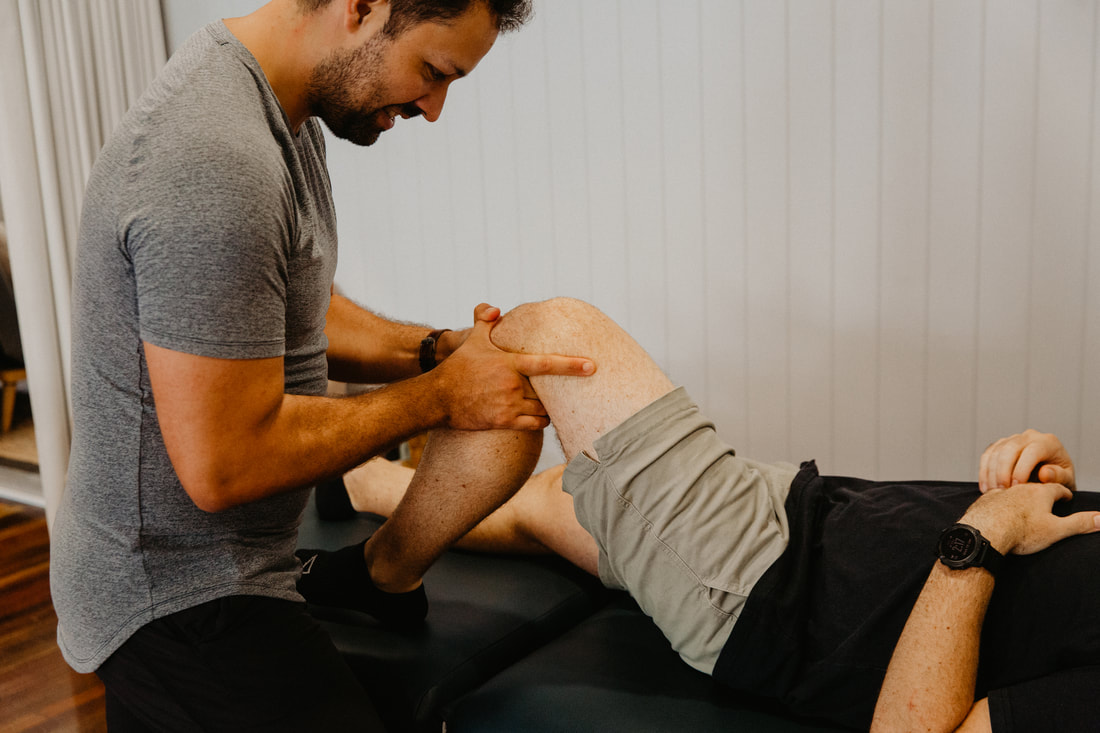
Physiotherapy for basketball injuries addresses the specific court movement demands of the sport — the explosive jump-landing mechanics, the multidirectional footwork, the hard court surface and the contact sport elements — alongside the general principles of lower limb and upper limb rehabilitation.
Ankle rehabilitation includes progressive proprioceptive retraining, peroneal strengthening and sport-specific agility training on court surfaces. The high recurrence rate of basketball ankle sprains makes this one of the most important injury prevention areas — a structured rehabilitation program after a first ankle sprain significantly reduces the risk of becoming a chronic re-sprainer. Ankle bracing guidance and taping technique are provided as part of return-to-court planning.
Patellar tendinopathy management follows the same progressive heavy slow resistance loading protocol as all tendinopathies — systematic loading of the patellar tendon through increasing demands, with careful jump load management that reduces training volume to below the pain threshold while maintaining conditioning through non-provocative alternatives. Return to full jumping and landing is the final phase, progressed criteria-based rather than time-based.
Landing mechanics retraining addressing the knee valgus collapse and reduced knee flexion at landing that predispose to both patellar tendon overload and ACL injury is one of the most important injury prevention contributions physiotherapy makes to basketball. Hip abductor and gluteal strengthening is the primary exercise intervention for improving landing mechanics.
Dry needling manages calf, gluteal, quadriceps and periscapular trigger points. Clinical Pilates provides hip stability, trunk control and deep stabiliser work. Real time ultrasound guides VMO and deep hip stabiliser retraining where pain has disrupted normal activation patterns.
Our physiotherapists Mauricio Bara and Eliane Machado both have experience in basketball-related injuries and are members of the Australian Physiotherapy Association. Eliane's doctoral research in lower limb biomechanics is directly relevant to the landing mechanics assessment and knee rehabilitation central to basketball injury management.
To book or find out more, call us on 07 3706 3407 or book online below. We see patients from across Brisbane's southside including Tarragindi, Coorparoo, Holland Park, Greenslopes and Mt Gravatt.
Basketball is a sport of explosive vertical jumping, rapid multidirectional movement, repeated sprinting and deceleration, physical contact and the sustained high-intensity demands of games played on hard court surfaces. The combination of hard court, high jumping volumes, contact sport elements and the specific overhead demands of shooting and rebounding creates a distinctive injury profile — one of the highest rates of ankle and knee injury of any team sport, alongside significant finger, hand and shoulder presentations from ball handling and physical contact.
At Articulate Physiotherapy in Tarragindi, we work with basketball players across all levels and age groups — from junior club players through to representative and semi-professional performers — managing both the acute injuries that interrupt seasons and the chronic overuse injuries that develop from high-volume training and competition.
Common basketball injuries
Ankle injuries — lateral ankle ligament sprains from landing, pivoting and contact — are the most common acute injury in basketball, accounting for approximately 40% of all basketball injuries. Landing on an opponent's foot — particularly after a rebound or drive to the basket — is the most common mechanism. The recurrence rate without adequate proprioceptive rehabilitation is high, and chronic ankle instability from inadequately treated sprains is one of the most common presentations in experienced basketball players. Ankle bracing and taping are widely used in basketball, but do not replace the proprioceptive retraining and strengthening that produce genuine long-term stability.
Knee injuries — patellar tendinopathy from the repeated explosive jumping and landing demands of basketball, ACL tears from non-contact pivoting and deceleration mechanisms, patellofemoral pain from the sustained hard court loading, and meniscal tears from rotational loading — are the most significant knee presentations. Patellar tendinopathy — jumper's knee — is the characteristic basketball overuse injury, reflecting the extreme eccentric demand placed on the patellar tendon by repeated maximal jumping and landing on hard court surfaces.
Finger and hand injuries — dislocations, fractures and ligament injuries from ball handling, passing, shooting and defensive contests — are extremely common in basketball and among the most frequently undertreated presentations. A jammed finger that is not properly assessed may involve a significant joint injury that, if untreated, produces chronic instability and functional limitation affecting ball handling permanently. Any finger injury producing significant swelling, deformity or inability to straighten the finger deserves clinical assessment and imaging rather than simply buddy taping and returning to play.
Calf strains and Achilles tendinopathy — from the explosive push-off demands of basketball sprinting and jumping, particularly on hard court surfaces — are common in older players and those returning from breaks. The transition from rest to high-intensity basketball training without adequate calf conditioning is a consistent injury driver in masters basketball and recreational competition.
Lower back pain from the physical demands of post play, defensive positioning and the sustained high-intensity effort of basketball — lumbar disc irritation and paraspinal overuse from the contact and rotational demands of interior play are particularly common in big men who sustain repeated physical contact in the post.
Shoulder injuries — rotator cuff tendinopathy from the overhead shooting and passing mechanics, shoulder contusions from contact and falls, and AC joint injuries from direct impact are common in players who combine high shooting volumes with physical contact sport.
Growth-related conditions in junior basketball players — Osgood-Schlatter disease and Sever's disease from the jumping and running demands of junior basketball are common in the 10 to 15 year age group and well managed with physiotherapy load management and strengthening.
Concussion from player contact and falls. Managed through our structured concussion management protocol including vestibular rehabilitation and graduated return-to-play.
How can physiotherapy help?
Physiotherapy for basketball injuries addresses the specific court movement demands of the sport — the explosive jump-landing mechanics, the multidirectional footwork, the hard court surface and the contact sport elements — alongside the general principles of lower limb and upper limb rehabilitation.
Ankle rehabilitation includes progressive proprioceptive retraining, peroneal strengthening and sport-specific agility training on court surfaces. The high recurrence rate of basketball ankle sprains makes this one of the most important injury prevention areas — a structured rehabilitation program after a first ankle sprain significantly reduces the risk of becoming a chronic re-sprainer. Ankle bracing guidance and taping technique are provided as part of return-to-court planning.
Patellar tendinopathy management follows the same progressive heavy slow resistance loading protocol as all tendinopathies — systematic loading of the patellar tendon through increasing demands, with careful jump load management that reduces training volume to below the pain threshold while maintaining conditioning through non-provocative alternatives. Return to full jumping and landing is the final phase, progressed criteria-based rather than time-based.
Landing mechanics retraining addressing the knee valgus collapse and reduced knee flexion at landing that predispose to both patellar tendon overload and ACL injury is one of the most important injury prevention contributions physiotherapy makes to basketball. Hip abductor and gluteal strengthening is the primary exercise intervention for improving landing mechanics.
Dry needling manages calf, gluteal, quadriceps and periscapular trigger points. Clinical Pilates provides hip stability, trunk control and deep stabiliser work. Real time ultrasound guides VMO and deep hip stabiliser retraining where pain has disrupted normal activation patterns.
Our physiotherapists Mauricio Bara and Eliane Machado both have experience in basketball-related injuries and are members of the Australian Physiotherapy Association. Eliane's doctoral research in lower limb biomechanics is directly relevant to the landing mechanics assessment and knee rehabilitation central to basketball injury management.
To book or find out more, call us on 07 3706 3407 or book online below. We see patients from across Brisbane's southside including Tarragindi, Coorparoo, Holland Park, Greenslopes and Mt Gravatt.
Who to book in with:
Ash O'Regan
|
Dr Eliane Machado PhD.
|
Mauricio Bara
|