Hip Bursitis.
What is hip bursitis?
Hip bursitis is an inflammatory condition of the bursa — a fluid-filled sac located between tissues such as bone, muscle, tendons and skin — that reduces friction in these areas. In the hip, the most affected bursa is the trochanteric bursa, which is situated on the outer part of the hip. When this bursa becomes irritated or inflamed, it causes pain in the hip region, commonly referred to as trochanteric bursitis.
Before proceeding it is worth clarifying the clinical landscape around this diagnosis, which has changed considerably in the past decade. The term "trochanteric bursitis" was historically used to describe most cases of lateral hip pain — but research using MRI and ultrasound has shown that isolated trochanteric bursitis (inflammation of the bursa without associated tendon pathology) is actually relatively uncommon. The majority of lateral hip pain presentations involve gluteal tendinopathy — degeneration of the gluteus medius and minimus tendons — with secondary bursal involvement. This is an important distinction because the management of gluteal tendinopathy differs meaningfully from the management of isolated bursitis.
For the broader clinical syndrome of lateral hip pain encompassing gluteal tendinopathy and bursitis together, see our greater trochanteric pain syndrome (GTPS) page. This page focuses on hip bursitis as a specific entity — including the presentations where bursitis is the primary pathology.
Types of hip bursitis
The hip has several bursae, each capable of becoming inflamed.
What causes hip bursitis?
Several factors can contribute to hip bursitis: overuse or repetitive actions, especially in athletes or individuals with jobs that require repetitive motion; direct trauma to the hip such as a fall; specific postures or anatomical abnormalities leading to uneven pressure on the bursa; underlying conditions like rheumatoid arthritis, hip injuries, or previous surgeries; and limb length discrepancies where one leg is shorter than the other.
Inflammatory arthritis — rheumatoid arthritis, gout, psoriatic arthritis — produces bursitis through direct synovial involvement. Septic bursitis — bacterial infection of the bursa from a skin wound, injection or haematogenous spread — is a distinct and serious condition requiring medical management including antibiotics and often aspiration, rather than physiotherapy as the primary intervention.
What are the symptoms?
Pain over the outer hip that is worse with lying on the affected side, climbing stairs, prolonged sitting and walking is the characteristic presentation of trochanteric bursitis. The pain may radiate into the lateral thigh. Local tenderness directly over the greater trochanter on palpation is a consistent finding. Unlike gluteal tendinopathy, trochanteric bursitis is often more diffuse in its tenderness pattern and may show more warmth and swelling over the greater trochanter.
Iliopsoas bursitis produces anterior groin and hip pain with a snapping sensation in some cases. Ischiogluteal bursitis produces focal tenderness directly over the ischial tuberosity that is exquisitely painful with prolonged sitting on hard surfaces.
How is it diagnosed?
A physiotherapist or doctor will conduct a physical examination, assessing the area for tenderness, swelling, and range of motion. A detailed history of the symptoms and activities leading to the discomfort will also be taken. Imaging studies such as ultrasound or MRI might be ordered to rule out other conditions and confirm the diagnosis.
Ultrasound directly visualises bursal fluid and thickening, distinguishes bursitis from tendon pathology, and can guide diagnostic or therapeutic aspiration and injection where indicated. MRI provides the most comprehensive assessment of both the bursa and the surrounding tendon and soft tissue structures.
How can physiotherapy help?
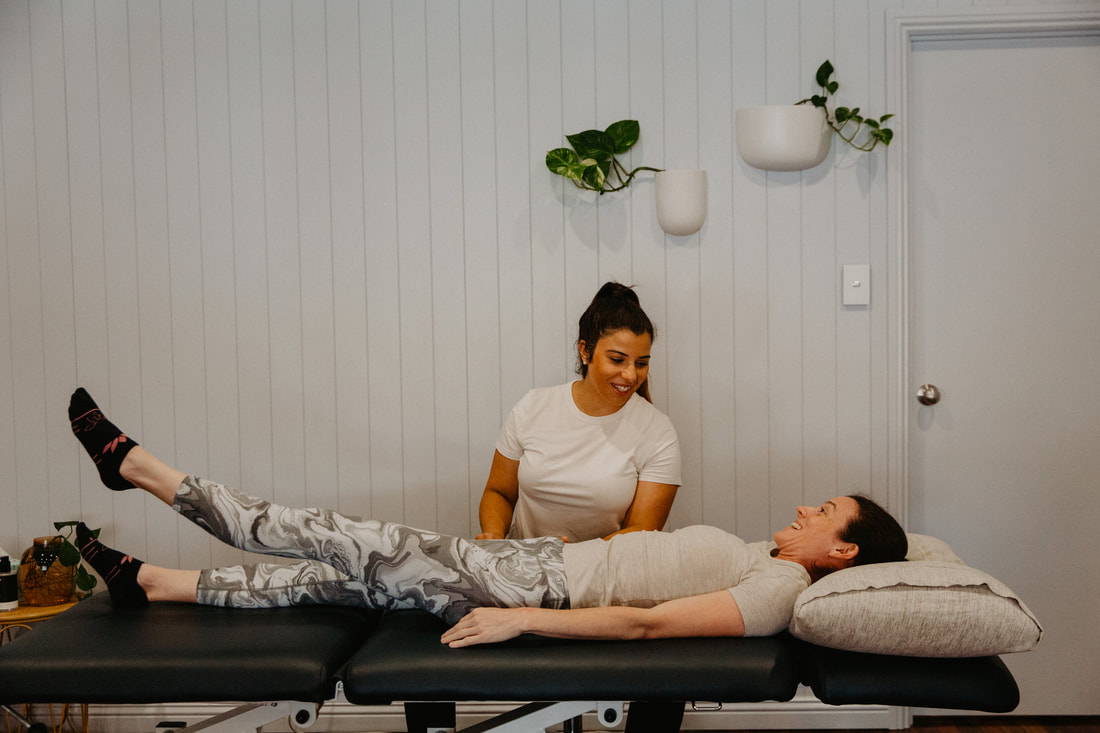
Physiotherapy is the primary treatment for most presentations of hip bursitis, addressing both the acute inflammation and the mechanical contributors that produced and perpetuate the bursal irritation.
In the acute phase, activity modification to reduce the provocative loading, ice application and gentle movement within comfortable limits manage symptoms while the bursa settles. For traumatic bursitis following a direct fall, a period of protected weight-bearing and offloading may be appropriate.
The mechanical factors driving chronic bursitis require the same physiotherapy approach as GTPS and gluteal tendinopathy — hip abductor and gluteal strengthening, load management and activity modification, and avoidance of compressive hip positions. Physiotherapy is vital in the management and treatment of hip bursitis. Manual therapy techniques like soft tissue massage and mobilisations can reduce swelling and promote healing. Exercise prescription of strengthening and stretching exercises restores muscle balance and improves joint mobility. Education on posture, movement mechanics and lifestyle modifications to prevent recurrence is also important.
For inflammatory bursitis secondary to systemic inflammatory conditions, physiotherapy works alongside medical management — disease-modifying medications and local corticosteroid injection — to manage the musculoskeletal consequences.
Clinical Pilates provides a controlled environment for progressive hip and gluteal strengthening. Dry needling of the gluteal and tensor fascia lata musculature assists with pain management. For patients with co-occurring conditions including obesity — a recognised risk factor for trochanteric bursitis — exercise physiology through a Chronic Disease Management Plan addresses the broader metabolic picture alongside local hip management.
Our physiotherapists Eliane Machado and Yulia Khasyanova and Exercise Physiologist Ash O'Regan all have experience in hip conditions. Eliane's doctoral research in lower limb biomechanics is directly relevant to the hip loading and gait assessment underpinning hip bursitis management.
To book or find out more, call us on 07 3706 3407 or book online below. We see patients from across Brisbane's southside including Tarragindi, Coorparoo, Holland Park, Greenslopes and Mt Gravatt.
Hip bursitis is an inflammatory condition of the bursa — a fluid-filled sac located between tissues such as bone, muscle, tendons and skin — that reduces friction in these areas. In the hip, the most affected bursa is the trochanteric bursa, which is situated on the outer part of the hip. When this bursa becomes irritated or inflamed, it causes pain in the hip region, commonly referred to as trochanteric bursitis.
Before proceeding it is worth clarifying the clinical landscape around this diagnosis, which has changed considerably in the past decade. The term "trochanteric bursitis" was historically used to describe most cases of lateral hip pain — but research using MRI and ultrasound has shown that isolated trochanteric bursitis (inflammation of the bursa without associated tendon pathology) is actually relatively uncommon. The majority of lateral hip pain presentations involve gluteal tendinopathy — degeneration of the gluteus medius and minimus tendons — with secondary bursal involvement. This is an important distinction because the management of gluteal tendinopathy differs meaningfully from the management of isolated bursitis.
For the broader clinical syndrome of lateral hip pain encompassing gluteal tendinopathy and bursitis together, see our greater trochanteric pain syndrome (GTPS) page. This page focuses on hip bursitis as a specific entity — including the presentations where bursitis is the primary pathology.
Types of hip bursitis
The hip has several bursae, each capable of becoming inflamed.
- Trochanteric bursitis — inflammation of the bursa overlying the greater trochanter — is the most common type and produces the characteristic lateral hip pain over and around the greater trochanter. It most commonly develops secondary to gluteal tendinopathy or as a result of direct trauma (a fall onto the lateral hip), inflammatory arthritis, or prolonged pressure on the lateral hip.
- Iliopsoas bursitis — inflammation of the large iliopsoas bursa between the iliopsoas muscle and the anterior hip joint — produces anterior hip and groin pain and is less commonly recognised than trochanteric bursitis. It may be associated with snapping hip syndrome and hip osteoarthritis, and can communicate with the hip joint in some individuals.
- Ischiogluteal bursitis — inflammation of the bursa over the ischial tuberosity — produces deep buttock pain with prolonged sitting and is sometimes called "weaver's bottom." It is associated with prolonged sitting on hard surfaces, cycling, and direct trauma.
What causes hip bursitis?
Several factors can contribute to hip bursitis: overuse or repetitive actions, especially in athletes or individuals with jobs that require repetitive motion; direct trauma to the hip such as a fall; specific postures or anatomical abnormalities leading to uneven pressure on the bursa; underlying conditions like rheumatoid arthritis, hip injuries, or previous surgeries; and limb length discrepancies where one leg is shorter than the other.
Inflammatory arthritis — rheumatoid arthritis, gout, psoriatic arthritis — produces bursitis through direct synovial involvement. Septic bursitis — bacterial infection of the bursa from a skin wound, injection or haematogenous spread — is a distinct and serious condition requiring medical management including antibiotics and often aspiration, rather than physiotherapy as the primary intervention.
What are the symptoms?
Pain over the outer hip that is worse with lying on the affected side, climbing stairs, prolonged sitting and walking is the characteristic presentation of trochanteric bursitis. The pain may radiate into the lateral thigh. Local tenderness directly over the greater trochanter on palpation is a consistent finding. Unlike gluteal tendinopathy, trochanteric bursitis is often more diffuse in its tenderness pattern and may show more warmth and swelling over the greater trochanter.
Iliopsoas bursitis produces anterior groin and hip pain with a snapping sensation in some cases. Ischiogluteal bursitis produces focal tenderness directly over the ischial tuberosity that is exquisitely painful with prolonged sitting on hard surfaces.
How is it diagnosed?
A physiotherapist or doctor will conduct a physical examination, assessing the area for tenderness, swelling, and range of motion. A detailed history of the symptoms and activities leading to the discomfort will also be taken. Imaging studies such as ultrasound or MRI might be ordered to rule out other conditions and confirm the diagnosis.
Ultrasound directly visualises bursal fluid and thickening, distinguishes bursitis from tendon pathology, and can guide diagnostic or therapeutic aspiration and injection where indicated. MRI provides the most comprehensive assessment of both the bursa and the surrounding tendon and soft tissue structures.
How can physiotherapy help?
Physiotherapy is the primary treatment for most presentations of hip bursitis, addressing both the acute inflammation and the mechanical contributors that produced and perpetuate the bursal irritation.
In the acute phase, activity modification to reduce the provocative loading, ice application and gentle movement within comfortable limits manage symptoms while the bursa settles. For traumatic bursitis following a direct fall, a period of protected weight-bearing and offloading may be appropriate.
The mechanical factors driving chronic bursitis require the same physiotherapy approach as GTPS and gluteal tendinopathy — hip abductor and gluteal strengthening, load management and activity modification, and avoidance of compressive hip positions. Physiotherapy is vital in the management and treatment of hip bursitis. Manual therapy techniques like soft tissue massage and mobilisations can reduce swelling and promote healing. Exercise prescription of strengthening and stretching exercises restores muscle balance and improves joint mobility. Education on posture, movement mechanics and lifestyle modifications to prevent recurrence is also important.
For inflammatory bursitis secondary to systemic inflammatory conditions, physiotherapy works alongside medical management — disease-modifying medications and local corticosteroid injection — to manage the musculoskeletal consequences.
Clinical Pilates provides a controlled environment for progressive hip and gluteal strengthening. Dry needling of the gluteal and tensor fascia lata musculature assists with pain management. For patients with co-occurring conditions including obesity — a recognised risk factor for trochanteric bursitis — exercise physiology through a Chronic Disease Management Plan addresses the broader metabolic picture alongside local hip management.
Our physiotherapists Eliane Machado and Yulia Khasyanova and Exercise Physiologist Ash O'Regan all have experience in hip conditions. Eliane's doctoral research in lower limb biomechanics is directly relevant to the hip loading and gait assessment underpinning hip bursitis management.
To book or find out more, call us on 07 3706 3407 or book online below. We see patients from across Brisbane's southside including Tarragindi, Coorparoo, Holland Park, Greenslopes and Mt Gravatt.
Who to book in with:
Yulia Khasyanova
|
Dr Eliane Machado PhD
|
Ash O'Regan
|