Yoga Physiotherapy.
The physical demands of yoga
Yoga encompasses a broad spectrum of physical practices — from restorative and yin styles at low physical intensity through to the sustained strength demands of ashtanga and the dynamic flow of vinyasa, and the extreme range of motion challenges of advanced asana practice. What unites them is the sustained loading of the body at or near end range of motion in positions that are not commonly encountered in other sports — extreme spinal flexion and extension, deep hip external rotation, shoulder hyperextension, and the sustained weight-bearing through the wrists and upper limb that is characteristic of arm balance and inversion practice.
This combination of extreme range demands, sustained end-range loading and the progressive push toward deeper and more advanced postures creates an injury profile that is both distinctive and frequently undertreated — because yoga is widely perceived as low-injury and therapeutic, and practitioners who sustain yoga-related injuries often minimise them or continue practising through pain in ways that perpetuate and worsen the condition.
At Articulate Physiotherapy in Tarragindi, yoga injury assessment and management is a specific clinical interest of Mauricio Bara, who has a personal yoga practice, taught anatomy and biomechanics to yoga teachers at Stretch Yoga, and brings a nuanced understanding of both the physical demands and the cultural context of yoga practice to his clinical work with yoga practitioners.
Common yoga injuries
Hamstring injuries — particularly proximal hamstring tendinopathy at the ischial tuberosity — are the most common significant yoga injury and one of the most consistently undertreated. The sustained end-range hip flexion of forward folds, with the pelvis in anterior tilt and the hamstrings under sustained tensile load near their proximal attachment, is the primary driver. Practitioners who push aggressively into deeper forward folds before developing the proximal hamstring tendon capacity to sustain this loading develop the characteristic deep buttock and posterior thigh pain that is exquisitely sensitive to seated positions, forward folds and running. The paradoxical management principle — that progressive loading rather than further stretching is the evidence-based treatment for proximal hamstring tendinopathy — is counterintuitive for yoga practitioners and requires careful explanation.
Wrist and hand injuries — carpal tunnel syndrome from the sustained wrist hyperextension of downward dog, plank and arm balances, De Quervain's tenosynovitis from the grip and rotation demands, and wrist extensor overuse from high-volume weight-bearing through the upper limb — are the most common upper limb presentations in regular yoga practitioners. The wrist hyperextension of downward dog and plank positions places the carpal tunnel contents under significant compressive and tensile stress, and practitioners who rapidly increase their arm balance practice without adequate wrist conditioning develop the characteristic dorsal wrist pain and median nerve symptoms.
Lower back injuries — lumbar disc irritation from the repeated extreme lumbar flexion of forward folds, facet joint syndrome from the repeated lumbar hyperextension of backbends, and paraspinal muscle overuse — are common across all yoga styles. The cultural emphasis in yoga on deepening postures and increasing range of motion can lead practitioners to push into end-range spinal positions before adequate spinal stabiliser strength is developed, producing the disc and facet presentations that are among the most common yoga injury referrals in physiotherapy.
Neck and cervical injuries from inversions — headstand and shoulderstand — are among the most significant yoga injuries from a clinical perspective. The compressive loading of full body weight through the cervical spine in headstand, and the extreme cervical flexion of shoulderstand, can produce cervical disc injuries, cervical facet joint syndrome and nerve root irritation. These postures require specific preparation and should not be attempted by practitioners with existing cervical pathology.
Hip injuries — hip labral tears and femoroacetabular impingement from the extreme hip external rotation and flexion demands of lotus, pigeon and hip-opening postures are increasingly recognised as significant yoga-related injuries. The repeated loading of the hip joint at end range — particularly in practitioners with bony hip morphology that limits the available range — produces labral stress that, over time, produces the characteristic deep groin and anterior hip pain of labral pathology.
Sacroiliac joint injuries — SIJ dysfunction from the asymmetric loading of twisted postures and the sustained end-range hip positions of yoga — is a common and frequently misattributed yoga injury. The SIJ is particularly vulnerable in practitioners with generalised joint hypermobility, and hypermobile yoga practitioners require specific attention to SIJ stability rather than further mobility work.
Shoulder injuries — rotator cuff tendinopathy from the sustained weight-bearing demands of arm balances and inversions, and shoulder impingement from the overhead and behind-back positions of advanced yoga — are common in practitioners who progress rapidly into arm balance and inversion practice without adequate rotator cuff preparation.
Hypermobility and yoga — a specific and important consideration. Yoga is practiced disproportionately by people with joint hypermobility, because the extreme ranges of motion that hypermobility allows are rewarded in yoga practice. However, the further stretching of already hypermobile joints — particularly when the emphasis is on gaining range rather than building stability — is one of the most consistent drivers of yoga-related injury in this population. Hypermobile yoga practitioners require a fundamentally different approach to their practice — prioritising stability, strength and controlled range over passive flexibility — and this is one of the most important clinical messages a physiotherapist can communicate to this group.
How can physiotherapy help?
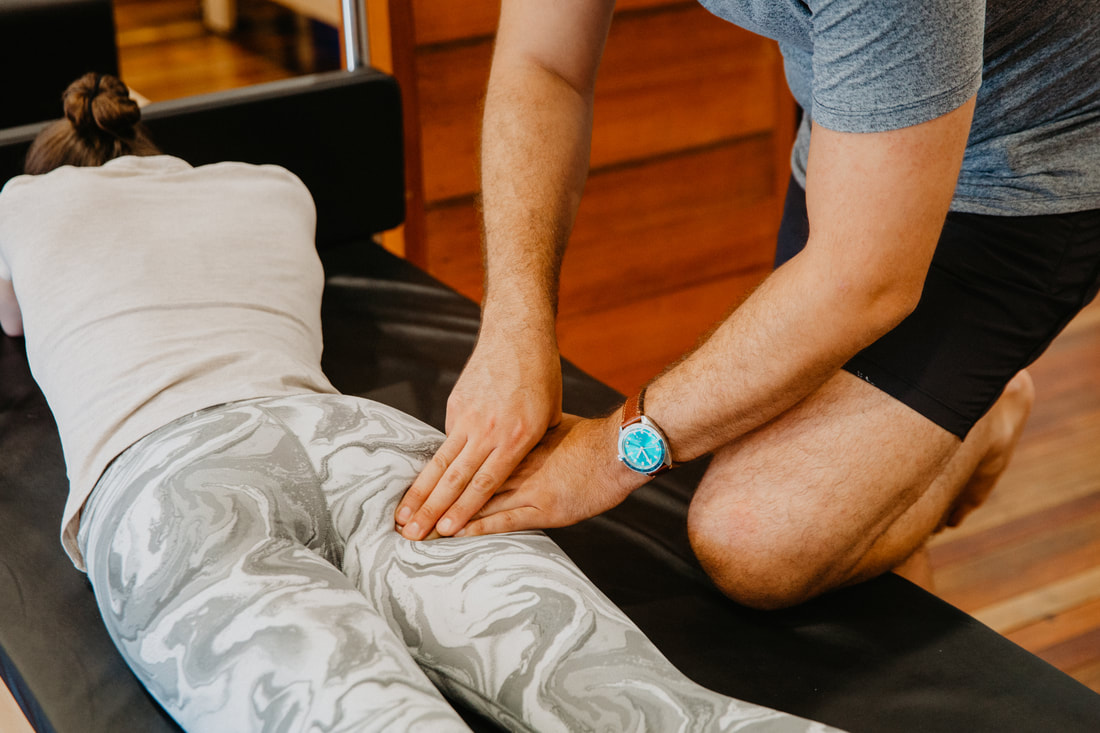
Physiotherapy for yoga injuries requires an understanding of the specific postures and practice styles that are producing symptoms, the practitioner's goals for their practice, and the cultural context of yoga — which often includes reluctance to modify or reduce practice, and a tendency to interpret pain as something to push through rather than a signal to address.
Hamstring rehabilitation for yoga practitioners involves the counterintuitive shift from passive stretching — which perpetuates proximal hamstring tendinopathy — to progressive loading through the Nordic hamstring and progressive hip hinge exercises. This requires careful explanation and often a significant modification of the practitioner's approach to forward folds during rehabilitation.
Wrist rehabilitation addresses the median nerve and extensor tendon contributors to yoga-related wrist pain — nerve mobilisation, wrist flexor and extensor strengthening, and progressive reintroduction of weight-bearing through increasingly loaded wrist positions. Wrist alignment and hand position adjustments in weight-bearing postures are as important as the direct physiotherapy interventions.
Lumbar rehabilitation addresses the disc, facet and stabiliser contributors to yoga-related back pain — deep stabiliser retraining using real time ultrasound, hip flexibility work to reduce compensatory lumbar loading in forward folds, and thoracic mobility work to distribute the spinal loading of backbends more evenly across the thoracic spine.
Hip rehabilitation addresses the impingement and labral contributors to yoga-related hip pain — modifying the extreme hip positions that are provocative, building the dynamic hip stability that protects the labrum and joint during end-range loading, and educating the practitioner about the difference between productive hip opening and provocative loading.
For hypermobile yoga practitioners, physiotherapy focuses specifically on building the active stability that allows practice to continue safely — gluteal and hip stabiliser strengthening, deep spinal stabiliser retraining, and a modified practice approach that prioritises controlled range over maximum passive flexibility.
Clinical Pilates is a natural complement to yoga rehabilitation — the emphasis on body awareness, core control and progressive loading in a Pilates context translates directly to the demands of yoga practice. Dry needling manages the paraspinal, piriformis, hamstring and periscapular trigger points common in regular yoga practitioners.
Our physiotherapist Mauricio Bara has a personal yoga practice, has taught anatomy and biomechanics to yoga teachers, and brings specific expertise in yoga injury assessment and management alongside his APA Sports Physiotherapist credentials. Yulia Khasyanova also brings specific expertise in hypermobility and connective tissue conditions that is directly relevant to the hypermobile yoga practitioner population.
To book or find out more, call us on 07 3706 3407 or book online below. We see patients from across Brisbane's southside including Tarragindi, Coorparoo, Holland Park, Greenslopes and Mt Gravatt.
Yoga encompasses a broad spectrum of physical practices — from restorative and yin styles at low physical intensity through to the sustained strength demands of ashtanga and the dynamic flow of vinyasa, and the extreme range of motion challenges of advanced asana practice. What unites them is the sustained loading of the body at or near end range of motion in positions that are not commonly encountered in other sports — extreme spinal flexion and extension, deep hip external rotation, shoulder hyperextension, and the sustained weight-bearing through the wrists and upper limb that is characteristic of arm balance and inversion practice.
This combination of extreme range demands, sustained end-range loading and the progressive push toward deeper and more advanced postures creates an injury profile that is both distinctive and frequently undertreated — because yoga is widely perceived as low-injury and therapeutic, and practitioners who sustain yoga-related injuries often minimise them or continue practising through pain in ways that perpetuate and worsen the condition.
At Articulate Physiotherapy in Tarragindi, yoga injury assessment and management is a specific clinical interest of Mauricio Bara, who has a personal yoga practice, taught anatomy and biomechanics to yoga teachers at Stretch Yoga, and brings a nuanced understanding of both the physical demands and the cultural context of yoga practice to his clinical work with yoga practitioners.
Common yoga injuries
Hamstring injuries — particularly proximal hamstring tendinopathy at the ischial tuberosity — are the most common significant yoga injury and one of the most consistently undertreated. The sustained end-range hip flexion of forward folds, with the pelvis in anterior tilt and the hamstrings under sustained tensile load near their proximal attachment, is the primary driver. Practitioners who push aggressively into deeper forward folds before developing the proximal hamstring tendon capacity to sustain this loading develop the characteristic deep buttock and posterior thigh pain that is exquisitely sensitive to seated positions, forward folds and running. The paradoxical management principle — that progressive loading rather than further stretching is the evidence-based treatment for proximal hamstring tendinopathy — is counterintuitive for yoga practitioners and requires careful explanation.
Wrist and hand injuries — carpal tunnel syndrome from the sustained wrist hyperextension of downward dog, plank and arm balances, De Quervain's tenosynovitis from the grip and rotation demands, and wrist extensor overuse from high-volume weight-bearing through the upper limb — are the most common upper limb presentations in regular yoga practitioners. The wrist hyperextension of downward dog and plank positions places the carpal tunnel contents under significant compressive and tensile stress, and practitioners who rapidly increase their arm balance practice without adequate wrist conditioning develop the characteristic dorsal wrist pain and median nerve symptoms.
Lower back injuries — lumbar disc irritation from the repeated extreme lumbar flexion of forward folds, facet joint syndrome from the repeated lumbar hyperextension of backbends, and paraspinal muscle overuse — are common across all yoga styles. The cultural emphasis in yoga on deepening postures and increasing range of motion can lead practitioners to push into end-range spinal positions before adequate spinal stabiliser strength is developed, producing the disc and facet presentations that are among the most common yoga injury referrals in physiotherapy.
Neck and cervical injuries from inversions — headstand and shoulderstand — are among the most significant yoga injuries from a clinical perspective. The compressive loading of full body weight through the cervical spine in headstand, and the extreme cervical flexion of shoulderstand, can produce cervical disc injuries, cervical facet joint syndrome and nerve root irritation. These postures require specific preparation and should not be attempted by practitioners with existing cervical pathology.
Hip injuries — hip labral tears and femoroacetabular impingement from the extreme hip external rotation and flexion demands of lotus, pigeon and hip-opening postures are increasingly recognised as significant yoga-related injuries. The repeated loading of the hip joint at end range — particularly in practitioners with bony hip morphology that limits the available range — produces labral stress that, over time, produces the characteristic deep groin and anterior hip pain of labral pathology.
Sacroiliac joint injuries — SIJ dysfunction from the asymmetric loading of twisted postures and the sustained end-range hip positions of yoga — is a common and frequently misattributed yoga injury. The SIJ is particularly vulnerable in practitioners with generalised joint hypermobility, and hypermobile yoga practitioners require specific attention to SIJ stability rather than further mobility work.
Shoulder injuries — rotator cuff tendinopathy from the sustained weight-bearing demands of arm balances and inversions, and shoulder impingement from the overhead and behind-back positions of advanced yoga — are common in practitioners who progress rapidly into arm balance and inversion practice without adequate rotator cuff preparation.
Hypermobility and yoga — a specific and important consideration. Yoga is practiced disproportionately by people with joint hypermobility, because the extreme ranges of motion that hypermobility allows are rewarded in yoga practice. However, the further stretching of already hypermobile joints — particularly when the emphasis is on gaining range rather than building stability — is one of the most consistent drivers of yoga-related injury in this population. Hypermobile yoga practitioners require a fundamentally different approach to their practice — prioritising stability, strength and controlled range over passive flexibility — and this is one of the most important clinical messages a physiotherapist can communicate to this group.
How can physiotherapy help?
Physiotherapy for yoga injuries requires an understanding of the specific postures and practice styles that are producing symptoms, the practitioner's goals for their practice, and the cultural context of yoga — which often includes reluctance to modify or reduce practice, and a tendency to interpret pain as something to push through rather than a signal to address.
Hamstring rehabilitation for yoga practitioners involves the counterintuitive shift from passive stretching — which perpetuates proximal hamstring tendinopathy — to progressive loading through the Nordic hamstring and progressive hip hinge exercises. This requires careful explanation and often a significant modification of the practitioner's approach to forward folds during rehabilitation.
Wrist rehabilitation addresses the median nerve and extensor tendon contributors to yoga-related wrist pain — nerve mobilisation, wrist flexor and extensor strengthening, and progressive reintroduction of weight-bearing through increasingly loaded wrist positions. Wrist alignment and hand position adjustments in weight-bearing postures are as important as the direct physiotherapy interventions.
Lumbar rehabilitation addresses the disc, facet and stabiliser contributors to yoga-related back pain — deep stabiliser retraining using real time ultrasound, hip flexibility work to reduce compensatory lumbar loading in forward folds, and thoracic mobility work to distribute the spinal loading of backbends more evenly across the thoracic spine.
Hip rehabilitation addresses the impingement and labral contributors to yoga-related hip pain — modifying the extreme hip positions that are provocative, building the dynamic hip stability that protects the labrum and joint during end-range loading, and educating the practitioner about the difference between productive hip opening and provocative loading.
For hypermobile yoga practitioners, physiotherapy focuses specifically on building the active stability that allows practice to continue safely — gluteal and hip stabiliser strengthening, deep spinal stabiliser retraining, and a modified practice approach that prioritises controlled range over maximum passive flexibility.
Clinical Pilates is a natural complement to yoga rehabilitation — the emphasis on body awareness, core control and progressive loading in a Pilates context translates directly to the demands of yoga practice. Dry needling manages the paraspinal, piriformis, hamstring and periscapular trigger points common in regular yoga practitioners.
Our physiotherapist Mauricio Bara has a personal yoga practice, has taught anatomy and biomechanics to yoga teachers, and brings specific expertise in yoga injury assessment and management alongside his APA Sports Physiotherapist credentials. Yulia Khasyanova also brings specific expertise in hypermobility and connective tissue conditions that is directly relevant to the hypermobile yoga practitioner population.
To book or find out more, call us on 07 3706 3407 or book online below. We see patients from across Brisbane's southside including Tarragindi, Coorparoo, Holland Park, Greenslopes and Mt Gravatt.
Who to book in with:
Mauricio Bara
|
Yulia Khasyanova
|
Ash O'Regan
|