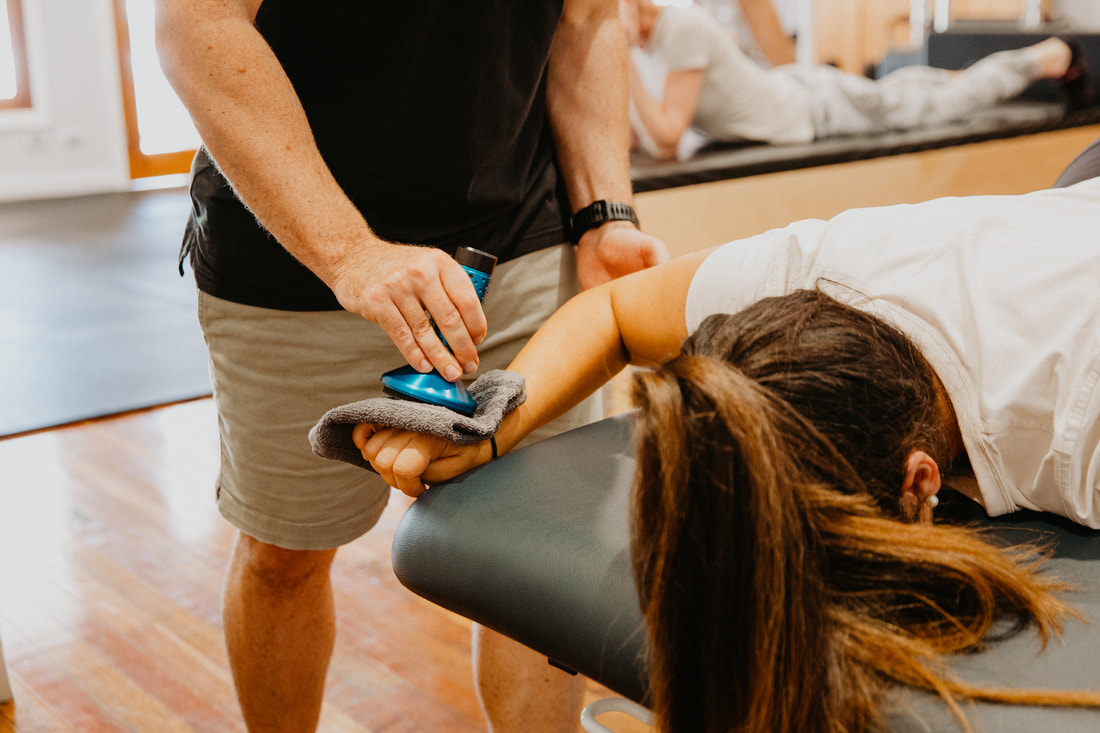
Tennis elbow physiotherapy Brisbane southside.
"LATERAL EPICONDYLITIS"
What is tennis elbow?
Lateral epicondylitis, commonly known as “tennis elbow”, is a condition involving tendons of one or more of the four muscles that attach to the elbow at a common tendon insertion point. These muscles are involved in extending the wrist or fingers. The most common type involves the ECRB (extensor carpi radialis brevis) muscle[1].
Although its common name comes from the high prevalence of the condition in tennis players, lateral epicondylitis also presents frequently in people who undertake physically demanding work[2] and is estimated to occur in 1% to 3% of the general population[3]. The condition is most prevalent in those aged 35-55 and affects males and females similarly[1].
What causes tennis elbow?
The most common cause of lateral elbow pain is unaccustomed repetitive activity that involves use of the forearm extensors, or repeated gripping with the hand[1]. This can include new activities such as a new job involving the use of hand tools, or activities that you have done before, but that you have greatly increased the duration of. Alternatively, lateral epicondylitis can also result from a single lift or other forceful action involving the forearm and hand[4].
What are the symptoms of tennis elbow?
People with lateral epicondylitis typically experience pain and a decrease in function[4], including:
It is important to note that there are several other conditions that present similarly to lateral epicondylitis, and so a physiotherapy diagnosis is important to rule out causes relating to local inflammation, joint disfunction, neural irritation, or referred pain from the neck or shoulder[1] .
How long will it take to recover?
Physiotherapy will help to reduce the time it takes to recover from lateral epicondylitis. Recovery time depends on several factors, including:
How will physiotherapy help?
An appropriate rehabilitation program is important for recovering and regaining function as early as possible. Physiotherapy aims to:
Lateral epicondylitis doesn’t present the same for everyone, so this will partly depend on the specific qualities of your symptoms. However, a progressive, exercise based approach using a combination of strategies will usually be involved[5,6,7], including:
Preventing reoccurrence
The first step in preventing relapse is adequate rehabilitation. Following this, load management is a vital part of preventing lateral epicondylitis from returning. This means understanding what kind of loading has caused it to occur in the first place, and ensuring that the amount of load, amount of activity repetition, and tools or equipment involved are appropriate for what your arm can tolerate[7,8].
References
[1] Ahmad, Z., Siddiqui, N., Malik, S. S., Abdus-Samee, M., Tytherleigh-Strong, G., & Rushton, N. (2013). Lateral epicondylitis: a review of pathology and management. The Bone and Joint Journal, 95(B), 1158-1164.
[2] Bretschneider, F., Los, F. S., Eygendaal, D., Kuijer, P. F. M., van der Molen, H. F. (2021). Work‐relatedness of lateral epicondylitis: Systematic reviewincluding meta‐analysis and GRADE work‐relatedness of lateral epicondylitis. American Journal of Industrial Medicine, 65 (41-50). doi: 10.1002/ajim.23303
[3] Faro, F., & Wolf, J. M. (2007). Lateral epicondylitis: review and current concepts. The Journal of Hand Surgery, 32A(8), 1271-1279. doi: 10.1016/j.jhsa.2007.07.019
[4] Vicenzino, B., Scott, A., Bell, S., & Popovic, N. (2017). Arm and elbow pain (ch 25): In Brukner & Khan’s Clinical Sports Medicine: Injuries, by P. Brukner & K. Khan.
[5] Bissett, L. M., & Vicenzino, B. (2015). Physiotherapy management of lateral epicondylalgia. Journal of Physiotherapy, 61(4), 174-181. doi: 10.1016/j.jphys.2015.07.015
[6] Pienimäki, T. T., Tarvainen, T. K., Siira, P. T., & Vanharanta, H. (1996). Progressive strengthening and stretching exercises and ultrasound for chronic lateral epicondylitis. Physiotherapy, 82(9), 522-530. doi: 10.1016/S0031-9406(05)66275-X
[7] Waseem, M., Nuhmani, S., Ram, C. S., & Sachin, Y. (2012). Lateral epicondylitis: a review of the literature. Journal of Back and Musculoskeletal Rehabilitation, 25, 131–142 doi: 10.3233/BMR-2012-0328
[8] van Rijn, R. M., Huisstede, B. M. A., Koes, B. W., & Burdorf, A. (2009). Associations between work-related factors and specific disorders at the elbow: a systematic literature review. Rheumatology, 48(5), 528-536. doi: 10.1093/rheumatology/kep013
Lateral epicondylitis, commonly known as “tennis elbow”, is a condition involving tendons of one or more of the four muscles that attach to the elbow at a common tendon insertion point. These muscles are involved in extending the wrist or fingers. The most common type involves the ECRB (extensor carpi radialis brevis) muscle[1].
Although its common name comes from the high prevalence of the condition in tennis players, lateral epicondylitis also presents frequently in people who undertake physically demanding work[2] and is estimated to occur in 1% to 3% of the general population[3]. The condition is most prevalent in those aged 35-55 and affects males and females similarly[1].
What causes tennis elbow?
The most common cause of lateral elbow pain is unaccustomed repetitive activity that involves use of the forearm extensors, or repeated gripping with the hand[1]. This can include new activities such as a new job involving the use of hand tools, or activities that you have done before, but that you have greatly increased the duration of. Alternatively, lateral epicondylitis can also result from a single lift or other forceful action involving the forearm and hand[4].
What are the symptoms of tennis elbow?
People with lateral epicondylitis typically experience pain and a decrease in function[4], including:
- Decreased grip strength
- Discomfort or pain with full wrist flexion
- Tenderness or pain on palpation of the area
- Difficulty and pain with repetitive activities involving gripping
- Pain that lingers following activity, potentially into the following day.
It is important to note that there are several other conditions that present similarly to lateral epicondylitis, and so a physiotherapy diagnosis is important to rule out causes relating to local inflammation, joint disfunction, neural irritation, or referred pain from the neck or shoulder[1] .
How long will it take to recover?
Physiotherapy will help to reduce the time it takes to recover from lateral epicondylitis. Recovery time depends on several factors, including:
- Type and severity of injury
- Engagement in appropriate rehabilitation
- Types of activities and demands you are returning to.
How will physiotherapy help?
An appropriate rehabilitation program is important for recovering and regaining function as early as possible. Physiotherapy aims to:
- Accurately diagnose, and differentiate from other injuries involving joint, connective tissue or neural tissue in the area
- Devise a pain reduction plan including the modification of current activities, and taping or bracing if necessary
- Help facilitate tissue repair through load management
- Restore movement, strength, and function through a tailored rehabilitation program
Lateral epicondylitis doesn’t present the same for everyone, so this will partly depend on the specific qualities of your symptoms. However, a progressive, exercise based approach using a combination of strategies will usually be involved[5,6,7], including:
- Initially reduce pain through forearm support or bracing and modifying activities, this may include adjusting work duties
- Increase your ability to move through full range using specific stretching techniques
- Increase your ability to tolerate load, potentially incorporating isometric, eccentric and isotonic resistance exercises
- Progressing from movements in basic flexion/extension, through rotation and into compound or functional movements involving the whole upper limb
Preventing reoccurrence
The first step in preventing relapse is adequate rehabilitation. Following this, load management is a vital part of preventing lateral epicondylitis from returning. This means understanding what kind of loading has caused it to occur in the first place, and ensuring that the amount of load, amount of activity repetition, and tools or equipment involved are appropriate for what your arm can tolerate[7,8].
References
[1] Ahmad, Z., Siddiqui, N., Malik, S. S., Abdus-Samee, M., Tytherleigh-Strong, G., & Rushton, N. (2013). Lateral epicondylitis: a review of pathology and management. The Bone and Joint Journal, 95(B), 1158-1164.
[2] Bretschneider, F., Los, F. S., Eygendaal, D., Kuijer, P. F. M., van der Molen, H. F. (2021). Work‐relatedness of lateral epicondylitis: Systematic reviewincluding meta‐analysis and GRADE work‐relatedness of lateral epicondylitis. American Journal of Industrial Medicine, 65 (41-50). doi: 10.1002/ajim.23303
[3] Faro, F., & Wolf, J. M. (2007). Lateral epicondylitis: review and current concepts. The Journal of Hand Surgery, 32A(8), 1271-1279. doi: 10.1016/j.jhsa.2007.07.019
[4] Vicenzino, B., Scott, A., Bell, S., & Popovic, N. (2017). Arm and elbow pain (ch 25): In Brukner & Khan’s Clinical Sports Medicine: Injuries, by P. Brukner & K. Khan.
[5] Bissett, L. M., & Vicenzino, B. (2015). Physiotherapy management of lateral epicondylalgia. Journal of Physiotherapy, 61(4), 174-181. doi: 10.1016/j.jphys.2015.07.015
[6] Pienimäki, T. T., Tarvainen, T. K., Siira, P. T., & Vanharanta, H. (1996). Progressive strengthening and stretching exercises and ultrasound for chronic lateral epicondylitis. Physiotherapy, 82(9), 522-530. doi: 10.1016/S0031-9406(05)66275-X
[7] Waseem, M., Nuhmani, S., Ram, C. S., & Sachin, Y. (2012). Lateral epicondylitis: a review of the literature. Journal of Back and Musculoskeletal Rehabilitation, 25, 131–142 doi: 10.3233/BMR-2012-0328
[8] van Rijn, R. M., Huisstede, B. M. A., Koes, B. W., & Burdorf, A. (2009). Associations between work-related factors and specific disorders at the elbow: a systematic literature review. Rheumatology, 48(5), 528-536. doi: 10.1093/rheumatology/kep013