Concussion.
What is a concussion?
A concussion is a type of mild traumatic brain injury (mTBI) caused by a blow or jolt to the head or body that causes the brain to move rapidly within the skull. This rapid acceleration-deceleration causes strain on neural tissue, leading to a brief disruption of normal brain function through metabolic rather than structural injury — in most concussions, standard imaging such as CT and MRI appears normal despite genuine neurological dysfunction.
Concussions are among the most common sporting injuries in contact and collision sports — rugby league, rugby union, AFL, soccer, hockey, basketball and combat sports all carry significant concussion risk — but also occur from falls, motor vehicle accidents and any situation involving impact to the head or body. They are not exclusively a sporting injury and physiotherapy for concussion management is relevant across all patient populations.
The current understanding of concussion has evolved substantially in recent years. Rest — once the universal prescription — is now understood to be appropriate only in the acute phase. Active rehabilitation, including carefully dosed exercise and physiotherapy addressing vestibular and cervical components, produces better outcomes than prolonged rest and reduces the risk of persistent symptoms.
What are the symptoms of concussion?
Symptoms vary among individuals and may include any combination of physical, cognitive, emotional and sleep-related features. Physical symptoms include headache — the most common symptom — dizziness, nausea, vomiting, visual disturbances (blurred or double vision), light and noise sensitivity, and balance problems. Cognitive symptoms include feeling mentally foggy, slowed thinking, difficulty concentrating and memory problems. Emotional symptoms include irritability, anxiety, depression and emotional lability. Sleep disturbance — sleeping more or less than usual, difficulty falling asleep — is common.
An important clinical point: the absence of loss of consciousness does not exclude concussion. Most concussions do not involve loss of consciousness, and this common misconception leads to underrecognition of concussion in sport and other settings.
When should I seek medical attention?
Any suspected concussion should be assessed by a healthcare professional. Certain symptoms require urgent emergency medical assessment — these red flags include a seizure, repeated vomiting, worsening headache that does not settle, one pupil larger than the other, extreme drowsiness or difficulty being woken, increasing confusion or agitation, slurred speech, or weakness or numbness in the limbs. These may indicate a more serious brain injury requiring urgent imaging.
How is concussion diagnosed?
Concussion is a clinical diagnosis — based on the mechanism of injury, symptom profile and neurological assessment. Standardised assessment tools including the Sport Concussion Assessment Tool (SCAT6) and the Immediate Post-Concussion Assessment and Cognitive Testing (ImPACT) protocol provide structured evaluation of symptoms, cognitive function, balance and neurological status. As noted above, standard MRI and CT are typically normal in concussion and their absence of findings does not exclude the diagnosis.
What is the typical recovery timeline?
Most concussions resolve within seven to fourteen days with appropriate management. Children and adolescents typically take longer to recover than adults. Factors that prolong recovery include a previous concussion history — each subsequent concussion carries a higher risk of prolonged recovery — high symptom burden at initial presentation, premature return to activity before symptoms have resolved, and significant psychological factors including anxiety and catastrophising.
Post-concussion syndrome — where symptoms persist beyond the typical recovery window — affects approximately 10 to 15% of concussion patients and requires more comprehensive multidisciplinary management. Persistent headache, dizziness, cognitive difficulties and fatigue in this group are often driven by a combination of unresolved vestibular dysfunction, cervical injury, autonomic nervous system dysregulation and psychological factors — all of which physiotherapy can directly address.
How can physiotherapy help?
Physiotherapy plays a vital role in the multidisciplinary approach to concussion management across all stages of recovery.
Acute assessment following head injuries, motor vehicle accidents, sporting injuries or falls establishes the diagnosis and treatment pathway and arranges referrals to specialists if necessary. Our physiotherapists can perform a comprehensive concussion assessment including symptom evaluation, cognitive screening, vestibular and oculomotor testing, cervical assessment and balance testing.
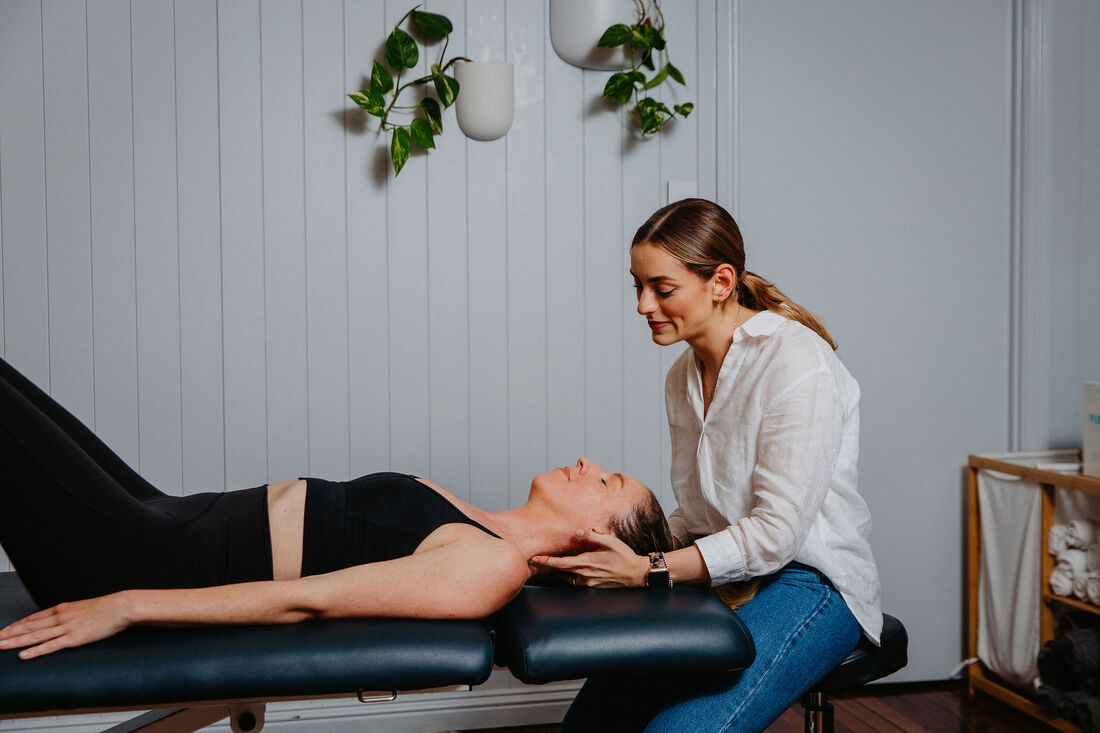
Cervical physiotherapy is one of the most important and most commonly overlooked components of concussion management. The cervical spine is frequently injured concurrently with the brain in head impacts — the same forces that cause the brain to move within the skull also cause cervical facet joint injury, muscle strain and ligamentous stress. Cervical injury produces headache, dizziness and neck pain that are often attributed entirely to the concussion itself and left untreated. Identifying and treating the cervical component frequently produces significant symptom reduction and accelerates overall recovery. Our cervical physiotherapy approach addresses the cervicogenic headache and dizziness that commonly accompany concussion.
Vestibular rehabilitation addresses the dizziness, balance problems and visual motion sensitivity that arise from concussion-related disruption of vestibular processing. Vestibular physiotherapy — gaze stabilisation exercises, habituation exercises and balance retraining — is one of the most evidence-based physiotherapy interventions for concussion and produces rapid improvement in dizziness and balance symptoms. See our vestibular disorders page for more detail on the specific techniques used.
Graded exercise — beginning with sub-symptom-threshold aerobic exercise and progressively increasing intensity as tolerated — is the evidence-based active rehabilitation approach for concussion. The Buffalo Concussion Treadmill Test (BCTT) identifies the heart rate at which symptoms are provoked and guides the initial exercise prescription. Regular sub-threshold aerobic exercise reduces post-concussion symptoms, improves autonomic nervous system regulation and accelerates recovery. The outdated advice of complete rest until symptom-free is no longer supported by the evidence and is associated with prolonged recovery.
Return-to-sport and return-to-learn protocols are structured graduated progressions that guide the safe reintroduction of sport, school and work activities after concussion. The current consensus-based return-to-sport protocol progresses through six stages — from complete rest through sport-specific exercise, non-contact training and full contact practice to return to competition — with a minimum of 24 hours between stages and requirement that each stage is symptom-free before progressing. Return to school and work follows a parallel graduated protocol. Our physiotherapists guide patients and their families through these protocols and communicate with schools, coaches and employers as needed.
Real time ultrasound assists in retraining deep cervical flexor activation where concussion and cervical injury have disrupted normal neuromuscular patterns. Clinical Pilates provides a carefully dosed exercise environment appropriate for the graded exercise phase of concussion recovery.
For CTP-funded patients whose concussion followed a motor vehicle accident, see our CTP physiotherapy page.
Our physiotherapist Yulia Khasyanova has experience in concussion management and vestibular rehabilitation. Mauricio Bara's APA Sports Physiotherapist credentials are particularly relevant for sporting concussion presentations and return-to-sport decision-making.
To book or find out more, call us on 07 3706 3407 or book online below. We see patients from across Brisbane's southside including Tarragindi, Coorparoo, Holland Park, Greenslopes and Mt Gravatt.
A concussion is a type of mild traumatic brain injury (mTBI) caused by a blow or jolt to the head or body that causes the brain to move rapidly within the skull. This rapid acceleration-deceleration causes strain on neural tissue, leading to a brief disruption of normal brain function through metabolic rather than structural injury — in most concussions, standard imaging such as CT and MRI appears normal despite genuine neurological dysfunction.
Concussions are among the most common sporting injuries in contact and collision sports — rugby league, rugby union, AFL, soccer, hockey, basketball and combat sports all carry significant concussion risk — but also occur from falls, motor vehicle accidents and any situation involving impact to the head or body. They are not exclusively a sporting injury and physiotherapy for concussion management is relevant across all patient populations.
The current understanding of concussion has evolved substantially in recent years. Rest — once the universal prescription — is now understood to be appropriate only in the acute phase. Active rehabilitation, including carefully dosed exercise and physiotherapy addressing vestibular and cervical components, produces better outcomes than prolonged rest and reduces the risk of persistent symptoms.
What are the symptoms of concussion?
Symptoms vary among individuals and may include any combination of physical, cognitive, emotional and sleep-related features. Physical symptoms include headache — the most common symptom — dizziness, nausea, vomiting, visual disturbances (blurred or double vision), light and noise sensitivity, and balance problems. Cognitive symptoms include feeling mentally foggy, slowed thinking, difficulty concentrating and memory problems. Emotional symptoms include irritability, anxiety, depression and emotional lability. Sleep disturbance — sleeping more or less than usual, difficulty falling asleep — is common.
An important clinical point: the absence of loss of consciousness does not exclude concussion. Most concussions do not involve loss of consciousness, and this common misconception leads to underrecognition of concussion in sport and other settings.
When should I seek medical attention?
Any suspected concussion should be assessed by a healthcare professional. Certain symptoms require urgent emergency medical assessment — these red flags include a seizure, repeated vomiting, worsening headache that does not settle, one pupil larger than the other, extreme drowsiness or difficulty being woken, increasing confusion or agitation, slurred speech, or weakness or numbness in the limbs. These may indicate a more serious brain injury requiring urgent imaging.
How is concussion diagnosed?
Concussion is a clinical diagnosis — based on the mechanism of injury, symptom profile and neurological assessment. Standardised assessment tools including the Sport Concussion Assessment Tool (SCAT6) and the Immediate Post-Concussion Assessment and Cognitive Testing (ImPACT) protocol provide structured evaluation of symptoms, cognitive function, balance and neurological status. As noted above, standard MRI and CT are typically normal in concussion and their absence of findings does not exclude the diagnosis.
What is the typical recovery timeline?
Most concussions resolve within seven to fourteen days with appropriate management. Children and adolescents typically take longer to recover than adults. Factors that prolong recovery include a previous concussion history — each subsequent concussion carries a higher risk of prolonged recovery — high symptom burden at initial presentation, premature return to activity before symptoms have resolved, and significant psychological factors including anxiety and catastrophising.
Post-concussion syndrome — where symptoms persist beyond the typical recovery window — affects approximately 10 to 15% of concussion patients and requires more comprehensive multidisciplinary management. Persistent headache, dizziness, cognitive difficulties and fatigue in this group are often driven by a combination of unresolved vestibular dysfunction, cervical injury, autonomic nervous system dysregulation and psychological factors — all of which physiotherapy can directly address.
How can physiotherapy help?
Physiotherapy plays a vital role in the multidisciplinary approach to concussion management across all stages of recovery.
Acute assessment following head injuries, motor vehicle accidents, sporting injuries or falls establishes the diagnosis and treatment pathway and arranges referrals to specialists if necessary. Our physiotherapists can perform a comprehensive concussion assessment including symptom evaluation, cognitive screening, vestibular and oculomotor testing, cervical assessment and balance testing.
Cervical physiotherapy is one of the most important and most commonly overlooked components of concussion management. The cervical spine is frequently injured concurrently with the brain in head impacts — the same forces that cause the brain to move within the skull also cause cervical facet joint injury, muscle strain and ligamentous stress. Cervical injury produces headache, dizziness and neck pain that are often attributed entirely to the concussion itself and left untreated. Identifying and treating the cervical component frequently produces significant symptom reduction and accelerates overall recovery. Our cervical physiotherapy approach addresses the cervicogenic headache and dizziness that commonly accompany concussion.
Vestibular rehabilitation addresses the dizziness, balance problems and visual motion sensitivity that arise from concussion-related disruption of vestibular processing. Vestibular physiotherapy — gaze stabilisation exercises, habituation exercises and balance retraining — is one of the most evidence-based physiotherapy interventions for concussion and produces rapid improvement in dizziness and balance symptoms. See our vestibular disorders page for more detail on the specific techniques used.
Graded exercise — beginning with sub-symptom-threshold aerobic exercise and progressively increasing intensity as tolerated — is the evidence-based active rehabilitation approach for concussion. The Buffalo Concussion Treadmill Test (BCTT) identifies the heart rate at which symptoms are provoked and guides the initial exercise prescription. Regular sub-threshold aerobic exercise reduces post-concussion symptoms, improves autonomic nervous system regulation and accelerates recovery. The outdated advice of complete rest until symptom-free is no longer supported by the evidence and is associated with prolonged recovery.
Return-to-sport and return-to-learn protocols are structured graduated progressions that guide the safe reintroduction of sport, school and work activities after concussion. The current consensus-based return-to-sport protocol progresses through six stages — from complete rest through sport-specific exercise, non-contact training and full contact practice to return to competition — with a minimum of 24 hours between stages and requirement that each stage is symptom-free before progressing. Return to school and work follows a parallel graduated protocol. Our physiotherapists guide patients and their families through these protocols and communicate with schools, coaches and employers as needed.
Real time ultrasound assists in retraining deep cervical flexor activation where concussion and cervical injury have disrupted normal neuromuscular patterns. Clinical Pilates provides a carefully dosed exercise environment appropriate for the graded exercise phase of concussion recovery.
For CTP-funded patients whose concussion followed a motor vehicle accident, see our CTP physiotherapy page.
Our physiotherapist Yulia Khasyanova has experience in concussion management and vestibular rehabilitation. Mauricio Bara's APA Sports Physiotherapist credentials are particularly relevant for sporting concussion presentations and return-to-sport decision-making.
To book or find out more, call us on 07 3706 3407 or book online below. We see patients from across Brisbane's southside including Tarragindi, Coorparoo, Holland Park, Greenslopes and Mt Gravatt.
Who to book in with:
Mauricio Bara
|
Yulia Khasyanova
|