Spondyloarthropathies and Ankylosing Spondylitis
What are spondyloarthropathies?
Spondyloarthropathies — also called spondyloarthritis or SpA — is an umbrella term for a group of inflammatory rheumatic diseases affecting the joints of the axial skeleton, predominantly the spine and sacroiliac joints. These diseases share common features including pain and inflammation in the spine, pelvis and peripheral joints, and the five main types are ankylosing spondylitis, psoriatic arthritis, reactive arthritis, enteropathic arthritis and undifferentiated spondyloarthritis.
What unites these conditions is inflammation at the entheses — the sites where tendons and ligaments attach to bone — producing pain and stiffness that is characteristically worse with rest and improved with movement. This is the defining feature that distinguishes inflammatory spinal pain from mechanical back pain, and it is clinically important: patients with spondyloarthritis often feel worse in the morning and after sitting, and genuinely better after exercise — the opposite of what most people expect from a painful condition.
Ankylosing spondylitis
Ankylosing spondylitis (AS) — now classified under the broader term axial spondyloarthritis (axSpA) — is the most common and most extensively studied of the spondyloarthropathies. It is a chronic inflammatory condition primarily affecting the sacroiliac joints and spine, with a characteristic pattern of inflammation that over time can lead to new bone formation and — in severe or poorly managed cases — fusion of spinal segments.
AS predominantly affects young adults, typically presenting between the ages of 15 and 45, and is more common in men than women in its classic presentation, though women are increasingly recognised to develop axSpA at similar rates but with different clinical features that are sometimes missed. The condition is strongly associated with the HLA-B27 gene — approximately 90% of people with AS carry this gene, though the majority of HLA-B27 positive individuals do not develop the disease.
Arthritis Australia provides comprehensive patient information on ankylosing spondylitis and related conditions.
What are the symptoms?
The hallmark symptoms are chronic lower back and buttock pain — often bilateral — and morning stiffness lasting more than 45 minutes that improves with activity. Sacroiliac joint pain is typically one of the earliest manifestations. Peripheral joint involvement — particularly the hips, knees, shoulders and entheses such as the Achilles tendon and plantar fascia — occurs in a significant proportion of patients.
Extra-articular features are common and important: anterior uveitis (eye inflammation) occurs in up to 40% of patients and requires urgent ophthalmological assessment. Inflammatory bowel disease and psoriasis are associated conditions. Cardiovascular risk is elevated in AS, and fatigue is a frequent and often underappreciated symptom.
How is it diagnosed?
Diagnosis requires a combination of clinical assessment, imaging and laboratory testing. The modified New York criteria require radiographic evidence of sacroiliitis on plain X-ray — but X-ray changes in AS typically lag behind the onset of inflammation by years. The ASAS criteria for axial spondyloarthritis capture patients earlier in the disease course using MRI evidence of sacroiliac joint inflammation (bone marrow oedema on STIR sequences) in combination with clinical features and HLA-B27 status.
Rheumatological assessment is central — the diagnosis and medical management of AS requires specialist rheumatology input. If you have inflammatory back pain and haven't yet seen a rheumatologist, your physiotherapist or GP can help facilitate the referral.
How can physiotherapy help?
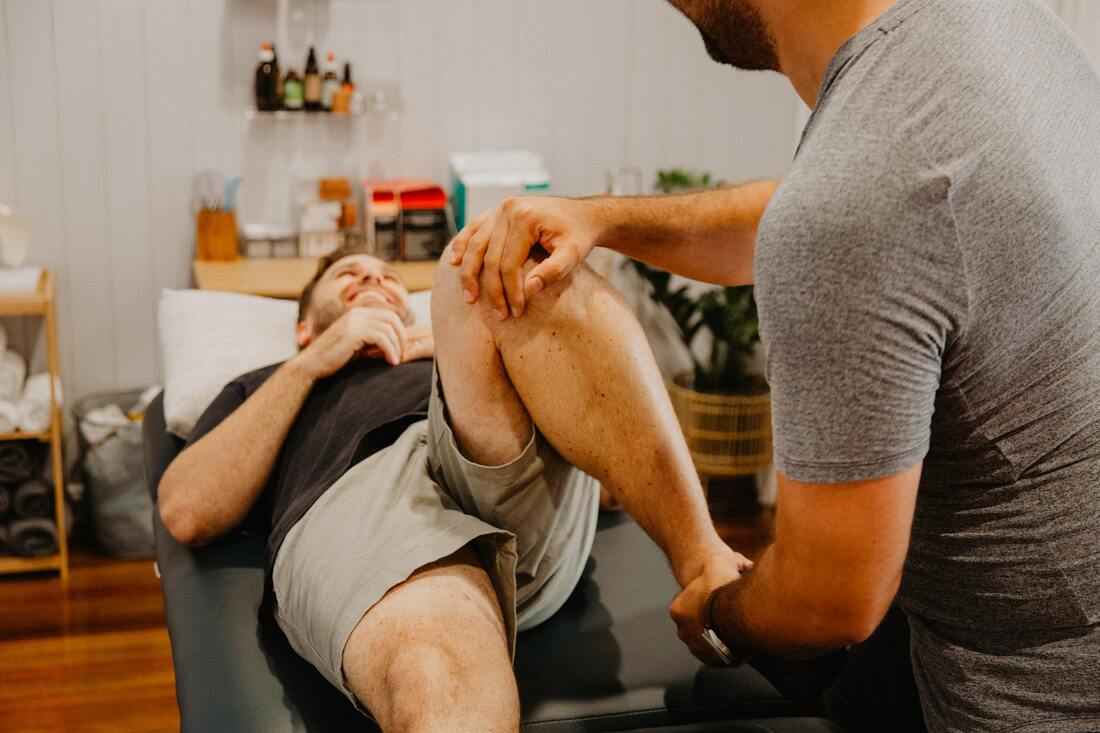
Physiotherapy is one of the most evidence-based interventions for ankylosing spondylitis and spondyloarthropathies, recommended by major clinical guidelines internationally as an essential component of management alongside medication.
The fundamental principle — that movement is medicine for inflammatory spinal conditions — underpins everything we do with these patients. Unlike mechanical back pain where temporary rest can be appropriate, inflammatory spinal conditions typically worsen with inactivity and improve with movement. Physiotherapy structured around maintaining and improving spinal mobility, thoracic cage expansion, hip mobility and overall physical function produces meaningful and sustained benefits.
Spinal mobility exercises — extension, lateral flexion and rotation — target the specific movements most at risk from inflammatory stiffening and progressive ankylosis. Thoracic cage mobility is critical for respiratory function, as rib cage involvement in AS can reduce chest expansion and impact breathing over time. Deep breathing exercises and chest expansion work are important components of AS physiotherapy that are often overlooked.
Postural management is central — the characteristic kyphotic deformity of advanced AS develops because gravity pulls the stiffening spine into flexion. Active extension exercises, prone lying positions, and sleeping on a firm mattress without a pillow under the head (or with minimal support) help counteract this tendency and preserve erect posture.
Hydrotherapy is particularly well-suited to spondyloarthritis management — the warm water reduces pain and muscle guarding, allowing greater range of motion than land-based exercise for many patients.
Clinical Pilates provides an excellent structured environment for spinal mobility, thoracic extension and hip mobility work, with the ability to precisely modify load and range for patients at different stages of the condition. Real time ultrasound guides deep stabilising muscle retraining where spinal inflammation has disrupted normal neuromuscular patterns.
For patients with peripheral joint involvement — hip, knee or shoulder arthritis in the context of spondyloarthritis — joint-specific physiotherapy is integrated alongside the spinal program. Exercise physiology contributes to cardiovascular fitness and overall physical capacity, which is significantly impaired in many AS patients and an independent determinant of quality of life. Eligible patients may access exercise physiology through a Chronic Disease Management Plan with a GP referral.
Our physiotherapists Yulia Khasyanova and Bethany Kippen and Exercise Physiologist Ash O'Regan all have experience in inflammatory spinal conditions. Yulia's specialist background in complex musculoskeletal conditions is particularly relevant for patients with systemic inflammatory disease and associated complications.
To book or find out more, call us on 07 3706 3407 or book online below. We see patients from across Brisbane's southside including Tarragindi, Coorparoo, Holland Park, Greenslopes and Mt Gravatt.
Spondyloarthropathies — also called spondyloarthritis or SpA — is an umbrella term for a group of inflammatory rheumatic diseases affecting the joints of the axial skeleton, predominantly the spine and sacroiliac joints. These diseases share common features including pain and inflammation in the spine, pelvis and peripheral joints, and the five main types are ankylosing spondylitis, psoriatic arthritis, reactive arthritis, enteropathic arthritis and undifferentiated spondyloarthritis.
What unites these conditions is inflammation at the entheses — the sites where tendons and ligaments attach to bone — producing pain and stiffness that is characteristically worse with rest and improved with movement. This is the defining feature that distinguishes inflammatory spinal pain from mechanical back pain, and it is clinically important: patients with spondyloarthritis often feel worse in the morning and after sitting, and genuinely better after exercise — the opposite of what most people expect from a painful condition.
Ankylosing spondylitis
Ankylosing spondylitis (AS) — now classified under the broader term axial spondyloarthritis (axSpA) — is the most common and most extensively studied of the spondyloarthropathies. It is a chronic inflammatory condition primarily affecting the sacroiliac joints and spine, with a characteristic pattern of inflammation that over time can lead to new bone formation and — in severe or poorly managed cases — fusion of spinal segments.
AS predominantly affects young adults, typically presenting between the ages of 15 and 45, and is more common in men than women in its classic presentation, though women are increasingly recognised to develop axSpA at similar rates but with different clinical features that are sometimes missed. The condition is strongly associated with the HLA-B27 gene — approximately 90% of people with AS carry this gene, though the majority of HLA-B27 positive individuals do not develop the disease.
Arthritis Australia provides comprehensive patient information on ankylosing spondylitis and related conditions.
What are the symptoms?
The hallmark symptoms are chronic lower back and buttock pain — often bilateral — and morning stiffness lasting more than 45 minutes that improves with activity. Sacroiliac joint pain is typically one of the earliest manifestations. Peripheral joint involvement — particularly the hips, knees, shoulders and entheses such as the Achilles tendon and plantar fascia — occurs in a significant proportion of patients.
Extra-articular features are common and important: anterior uveitis (eye inflammation) occurs in up to 40% of patients and requires urgent ophthalmological assessment. Inflammatory bowel disease and psoriasis are associated conditions. Cardiovascular risk is elevated in AS, and fatigue is a frequent and often underappreciated symptom.
How is it diagnosed?
Diagnosis requires a combination of clinical assessment, imaging and laboratory testing. The modified New York criteria require radiographic evidence of sacroiliitis on plain X-ray — but X-ray changes in AS typically lag behind the onset of inflammation by years. The ASAS criteria for axial spondyloarthritis capture patients earlier in the disease course using MRI evidence of sacroiliac joint inflammation (bone marrow oedema on STIR sequences) in combination with clinical features and HLA-B27 status.
Rheumatological assessment is central — the diagnosis and medical management of AS requires specialist rheumatology input. If you have inflammatory back pain and haven't yet seen a rheumatologist, your physiotherapist or GP can help facilitate the referral.
How can physiotherapy help?
Physiotherapy is one of the most evidence-based interventions for ankylosing spondylitis and spondyloarthropathies, recommended by major clinical guidelines internationally as an essential component of management alongside medication.
The fundamental principle — that movement is medicine for inflammatory spinal conditions — underpins everything we do with these patients. Unlike mechanical back pain where temporary rest can be appropriate, inflammatory spinal conditions typically worsen with inactivity and improve with movement. Physiotherapy structured around maintaining and improving spinal mobility, thoracic cage expansion, hip mobility and overall physical function produces meaningful and sustained benefits.
Spinal mobility exercises — extension, lateral flexion and rotation — target the specific movements most at risk from inflammatory stiffening and progressive ankylosis. Thoracic cage mobility is critical for respiratory function, as rib cage involvement in AS can reduce chest expansion and impact breathing over time. Deep breathing exercises and chest expansion work are important components of AS physiotherapy that are often overlooked.
Postural management is central — the characteristic kyphotic deformity of advanced AS develops because gravity pulls the stiffening spine into flexion. Active extension exercises, prone lying positions, and sleeping on a firm mattress without a pillow under the head (or with minimal support) help counteract this tendency and preserve erect posture.
Hydrotherapy is particularly well-suited to spondyloarthritis management — the warm water reduces pain and muscle guarding, allowing greater range of motion than land-based exercise for many patients.
Clinical Pilates provides an excellent structured environment for spinal mobility, thoracic extension and hip mobility work, with the ability to precisely modify load and range for patients at different stages of the condition. Real time ultrasound guides deep stabilising muscle retraining where spinal inflammation has disrupted normal neuromuscular patterns.
For patients with peripheral joint involvement — hip, knee or shoulder arthritis in the context of spondyloarthritis — joint-specific physiotherapy is integrated alongside the spinal program. Exercise physiology contributes to cardiovascular fitness and overall physical capacity, which is significantly impaired in many AS patients and an independent determinant of quality of life. Eligible patients may access exercise physiology through a Chronic Disease Management Plan with a GP referral.
Our physiotherapists Yulia Khasyanova and Bethany Kippen and Exercise Physiologist Ash O'Regan all have experience in inflammatory spinal conditions. Yulia's specialist background in complex musculoskeletal conditions is particularly relevant for patients with systemic inflammatory disease and associated complications.
To book or find out more, call us on 07 3706 3407 or book online below. We see patients from across Brisbane's southside including Tarragindi, Coorparoo, Holland Park, Greenslopes and Mt Gravatt.
Who to book in with:
Yulia Khasyanova
|
Emma Cameron
|
Ash O'Regan
|