Postnatal Physiotherapy.
Investing in your recovery after birth
Giving birth is one of the most significant physical events of a person's life — and the postpartum period is a critical window for addressing the physical changes of pregnancy and birth before they become established, long-term problems. The window to get on top of small problems before they become big problems is short. Although simply caring for a newborn can feel overwhelming in itself, investing in your physical recovery early genuinely does make the transition into motherhood more comfortable and sustainable.
A women's health physiotherapist can help to address muscle weakness and fatigue including abdominal and pelvic floor dysfunction, incontinence, abdominal separation, pelvic pain and low back pain. Getting on top of these issues early truly can make the transition into motherhood more comfortable and enjoyable.
At Articulate Physiotherapy in Tarragindi, our postnatal physiotherapy team provides comprehensive, consent-focused and compassionate care for new mothers across all stages of the postpartum period — from the early weeks after birth through to return to sport and high-performance exercise.
What does postnatal physiotherapy cover?
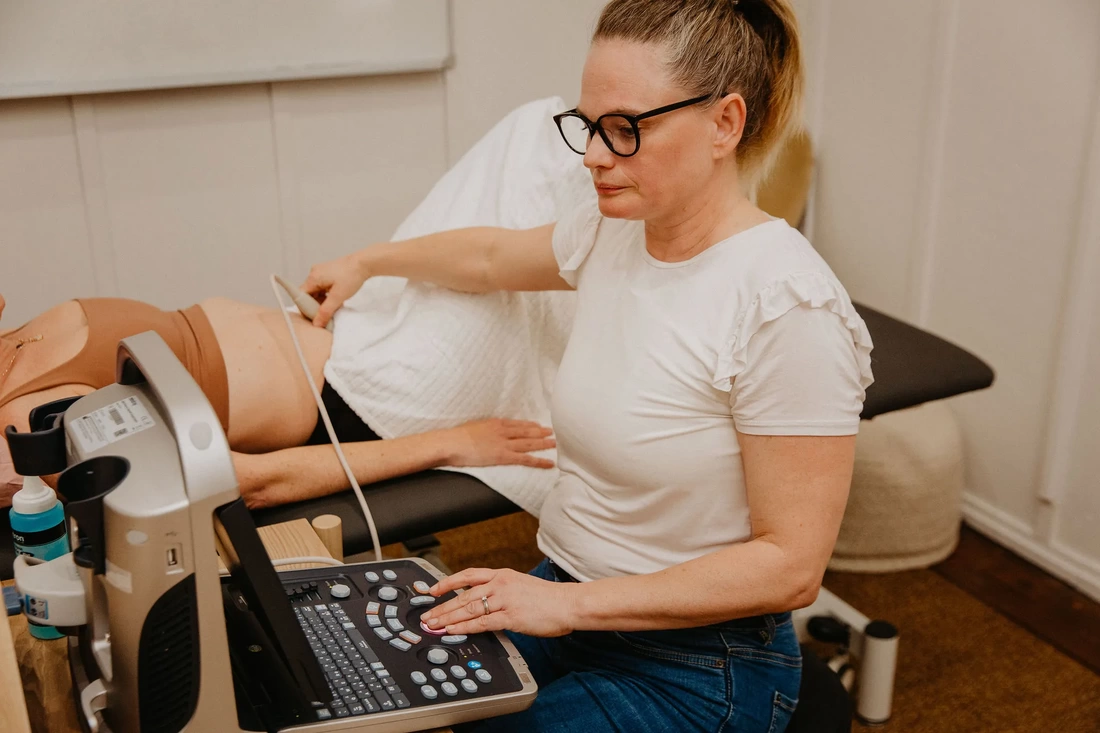
Diastasis recti (abdominal separation) affects the majority of women during pregnancy as the linea alba stretches to accommodate the growing uterus. Not all diastasis recti requires treatment — the clinical significance depends on the functional capacity of the separation, not its width alone. Real time ultrasound directly visualises the separation and its functional response to loading, allowing us to develop a targeted rehabilitation program rather than applying a generic protocol.
Postnatal back pain from the physical demands of newborn care — feeding postures, repeated lifting from low surfaces, carrying, side-lying — is one of the most common postnatal complaints. The combination of deconditioned core musculature, sleep deprivation and the sustained awkward postures of infant care creates a perfect storm for lumbar and thoracic pain. Physiotherapy addressing the specific postural and load patterns of early parenthood produces rapid and meaningful improvement.
Pelvic floor rehabilitation — addressing weakness, altered muscle patterns and load tolerance deficits following vaginal or caesarean birth — is one of the most important postnatal physiotherapy interventions. While internal pelvic floor assessment is outside our current scope, we address the external musculoskeletal contributors through real time ultrasound-guided abdominal and pelvic floor retraining and exercise prescription, and refer to specialist pelvic floor physiotherapists where internal assessment is clinically indicated.
Caesarean scar management — desensitisation, massage and mobilisation of the scar tissue from six weeks post-operatively — restores normal tissue mobility and reduces the secondary effects of restricted scar adhesions on pelvic and abdominal function. Many women are not aware that caesarean scar management is available or that it can make a meaningful difference to their comfort and function well beyond the healing period.
Return to exercise guidance is one of the most frequently sought and most frequently poorly answered postnatal questions. The generic advice to "wait six weeks" before returning to exercise is inadequate — the readiness to return to exercise, running and high-impact activity depends on specific physical criteria rather than a calendar milestone. Our physiotherapists — particularly Mauricio and Emma — apply a criteria-based return-to-exercise and return-to-running assessment that determines actual readiness rather than assumed readiness. The return to running postpartum guidelines provide the framework for this assessment.
Mastitis — therapeutic ultrasound and manual therapy for blocked ducts and inflammatory mastitis during breastfeeding. See our mastitis physiotherapy page for detail.
Neck and shoulder pain from breastfeeding and carrying postures is extremely common in the early postnatal period. Forward head posture, thoracic kyphosis and sustained shoulder elevation produce cervicogenic headache and upper back pain that physiotherapy addresses through manual therapy, postural correction and ergonomic advice for feeding positions.
Mums and Bubs Postnatal Pilates
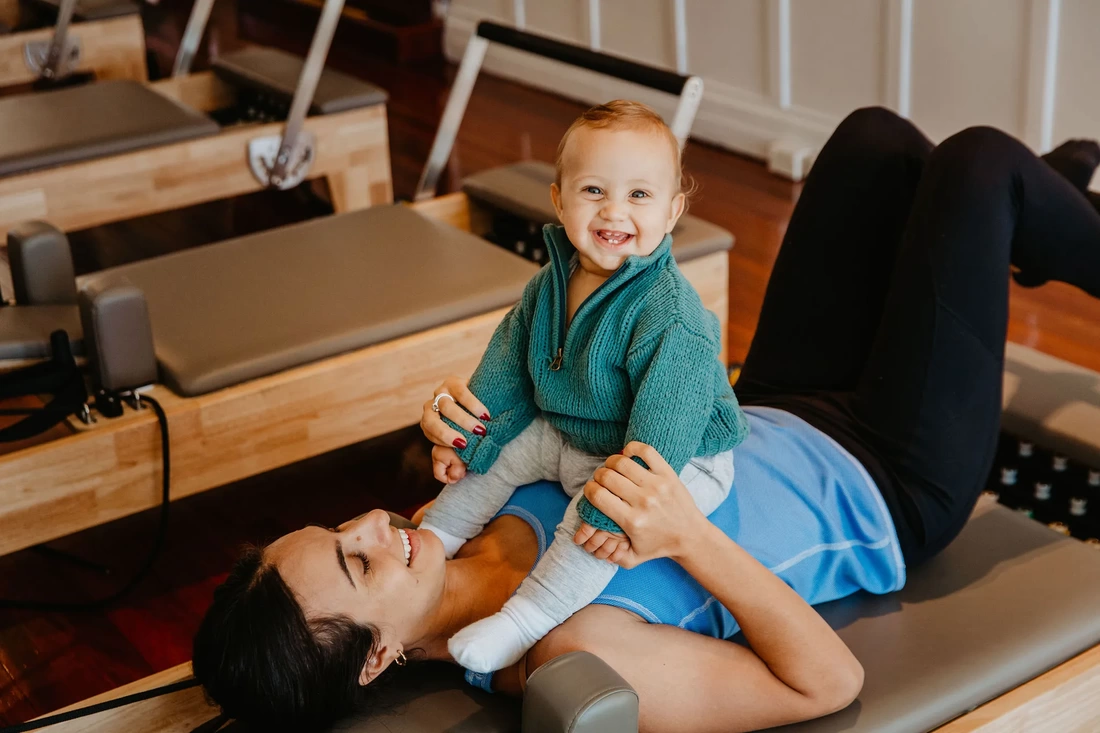
Our Mums and Bubs Postnatal 8-week Pilates course is a supervised small-group exercise course specifically designed for new mothers from six weeks postpartum. Babies are welcome — it is designed around the reality of early parenthood. The course focuses on rebuilding core and pelvic floor function, restoring postural strength and building the cardiovascular fitness and lower limb capacity needed for a full return to activity. Each intake includes a free physiotherapist assessment and AxIT strength test before commencement. Claimable on private health insurance under code 596.
How can physiotherapy help?
Women's health physiotherapy uses a combination of thorough assessments, manual therapy, exercise prescription, education and home exercise programs to help alleviate discomfort, improve posture and restore functional capacity. Here at Articulate we are able to utilise real time ultrasound in order to assess muscle separation or weakness and have a wonderful referral network where we can help you to find the best team for any more complex problems.
Clinical Pilates provides a structured, supervised exercise environment for postnatal rehabilitation — the emphasis on core activation, body awareness and progressive loading makes it ideal for the postnatal period where rebuilding deep stabiliser function is the primary rehabilitation goal.
Our physiotherapists Bethany Kippen and Emma Cameron both have experience in postnatal conditions and are members of the Australian Physiotherapy Association. Bethany's specific interest in postnatal care and return to exercise — including her training in mastitis management through the Australian Breastfeeding Association — and Mauricio's expertise in return-to-sport and return-to-running assessment make this a strong team for postnatal presentations at all stages of recovery.
To book or find out more, call us on 07 3706 3407 or book online below. We see patients from across Brisbane's southside including Tarragindi, Coorparoo, Holland Park, Greenslopes and Mt Gravatt.
Giving birth is one of the most significant physical events of a person's life — and the postpartum period is a critical window for addressing the physical changes of pregnancy and birth before they become established, long-term problems. The window to get on top of small problems before they become big problems is short. Although simply caring for a newborn can feel overwhelming in itself, investing in your physical recovery early genuinely does make the transition into motherhood more comfortable and sustainable.
A women's health physiotherapist can help to address muscle weakness and fatigue including abdominal and pelvic floor dysfunction, incontinence, abdominal separation, pelvic pain and low back pain. Getting on top of these issues early truly can make the transition into motherhood more comfortable and enjoyable.
At Articulate Physiotherapy in Tarragindi, our postnatal physiotherapy team provides comprehensive, consent-focused and compassionate care for new mothers across all stages of the postpartum period — from the early weeks after birth through to return to sport and high-performance exercise.
What does postnatal physiotherapy cover?
Diastasis recti (abdominal separation) affects the majority of women during pregnancy as the linea alba stretches to accommodate the growing uterus. Not all diastasis recti requires treatment — the clinical significance depends on the functional capacity of the separation, not its width alone. Real time ultrasound directly visualises the separation and its functional response to loading, allowing us to develop a targeted rehabilitation program rather than applying a generic protocol.
Postnatal back pain from the physical demands of newborn care — feeding postures, repeated lifting from low surfaces, carrying, side-lying — is one of the most common postnatal complaints. The combination of deconditioned core musculature, sleep deprivation and the sustained awkward postures of infant care creates a perfect storm for lumbar and thoracic pain. Physiotherapy addressing the specific postural and load patterns of early parenthood produces rapid and meaningful improvement.
Pelvic floor rehabilitation — addressing weakness, altered muscle patterns and load tolerance deficits following vaginal or caesarean birth — is one of the most important postnatal physiotherapy interventions. While internal pelvic floor assessment is outside our current scope, we address the external musculoskeletal contributors through real time ultrasound-guided abdominal and pelvic floor retraining and exercise prescription, and refer to specialist pelvic floor physiotherapists where internal assessment is clinically indicated.
Caesarean scar management — desensitisation, massage and mobilisation of the scar tissue from six weeks post-operatively — restores normal tissue mobility and reduces the secondary effects of restricted scar adhesions on pelvic and abdominal function. Many women are not aware that caesarean scar management is available or that it can make a meaningful difference to their comfort and function well beyond the healing period.
Return to exercise guidance is one of the most frequently sought and most frequently poorly answered postnatal questions. The generic advice to "wait six weeks" before returning to exercise is inadequate — the readiness to return to exercise, running and high-impact activity depends on specific physical criteria rather than a calendar milestone. Our physiotherapists — particularly Mauricio and Emma — apply a criteria-based return-to-exercise and return-to-running assessment that determines actual readiness rather than assumed readiness. The return to running postpartum guidelines provide the framework for this assessment.
Mastitis — therapeutic ultrasound and manual therapy for blocked ducts and inflammatory mastitis during breastfeeding. See our mastitis physiotherapy page for detail.
Neck and shoulder pain from breastfeeding and carrying postures is extremely common in the early postnatal period. Forward head posture, thoracic kyphosis and sustained shoulder elevation produce cervicogenic headache and upper back pain that physiotherapy addresses through manual therapy, postural correction and ergonomic advice for feeding positions.
Mums and Bubs Postnatal Pilates
Our Mums and Bubs Postnatal 8-week Pilates course is a supervised small-group exercise course specifically designed for new mothers from six weeks postpartum. Babies are welcome — it is designed around the reality of early parenthood. The course focuses on rebuilding core and pelvic floor function, restoring postural strength and building the cardiovascular fitness and lower limb capacity needed for a full return to activity. Each intake includes a free physiotherapist assessment and AxIT strength test before commencement. Claimable on private health insurance under code 596.
How can physiotherapy help?
Women's health physiotherapy uses a combination of thorough assessments, manual therapy, exercise prescription, education and home exercise programs to help alleviate discomfort, improve posture and restore functional capacity. Here at Articulate we are able to utilise real time ultrasound in order to assess muscle separation or weakness and have a wonderful referral network where we can help you to find the best team for any more complex problems.
Clinical Pilates provides a structured, supervised exercise environment for postnatal rehabilitation — the emphasis on core activation, body awareness and progressive loading makes it ideal for the postnatal period where rebuilding deep stabiliser function is the primary rehabilitation goal.
Our physiotherapists Bethany Kippen and Emma Cameron both have experience in postnatal conditions and are members of the Australian Physiotherapy Association. Bethany's specific interest in postnatal care and return to exercise — including her training in mastitis management through the Australian Breastfeeding Association — and Mauricio's expertise in return-to-sport and return-to-running assessment make this a strong team for postnatal presentations at all stages of recovery.
To book or find out more, call us on 07 3706 3407 or book online below. We see patients from across Brisbane's southside including Tarragindi, Coorparoo, Holland Park, Greenslopes and Mt Gravatt.
Who to book in with:
Emma Cameron
|
Bethany Kippen
|
Ash O'Regan
|
If you are unsure about which appointment type is right for you, please don't hesitate to get in touch with our friendly reception staff by calling 07 3706 3407 or emailing [email protected].