Boxing Physiotherapy.
The physical demands of boxing
Boxing is a combat sport combining explosive upper body striking, defensive head movement, footwork and the sustained aerobic and anaerobic demands of rounds lasting two to three minutes with minimal recovery. Whether practiced as competitive amateur or professional boxing, white collar fitness boxing or technical skill training, boxing places significant demands on the hands, wrists, shoulders, neck and core — and the contact sport environment of sparring adds the collision and impact exposures that produce the sport's acute injury profile.
At Articulate Physiotherapy in Tarragindi, we work with boxers across all formats and levels — from fitness boxers who train for health and skill through to competitive amateur and professional fighters — managing the acute injuries that interrupt training camps and the chronic overuse injuries that accumulate across boxing careers.
Common boxing injuries
Hand and wrist injuries are the most common injury in boxing and the most frequently undertreated. The impact forces transmitted through the fist at the moment of contact are substantial — and incorrect fist alignment, poor wrapping technique or inadequate glove selection amplify these forces significantly. Metacarpal fractures — particularly the fourth and fifth metacarpal (boxer's fracture) from impact with a misaligned fist — are the most common acute fracture. Wrist sprains from hyperextension on missed or blocked punches and De Quervain's tenosynovitis from the grip and rotation demands of punching are common overuse presentations. Adequate wrapping technique and appropriate glove selection are the most important preventive measures — and advice on these is a routine part of boxing physiotherapy management.
Shoulder injuries — rotator cuff tendinopathy from the high punching volumes of boxing training, shoulder impingement from the overhead and horizontal striking mechanics, and AC joint injuries from blocking and defensive contact in sparring — are common in high-volume boxers. The rapid deceleration of the punching follow-through places significant eccentric demand on the posterior rotator cuff, producing the characteristic overuse pattern in the decelerating muscles of experienced fighters.
Neck and cervical spine injuries — cervical muscle strains, cervicogenic headache and whiplash-type presentations from head contact and defensive head movement — are common in boxers who spar regularly. The repeated submaximal head movements of defensive boxing — slipping, rolling and ducking — load the cervical spine in sustained flexion and rotation patterns that produce cervical overuse presentations distinct from the acute impact injuries of head contact.
Concussion — from head contact in sparring and competition — is the most clinically significant injury in boxing and requires the same structured concussion management approach as any contact sport, including vestibular rehabilitation, cervical assessment and graduated return-to-contact protocols. Any head contact producing symptoms requires immediate removal from sparring and appropriate clinical assessment before return — there is no acceptable "walking it off" in boxing concussion management.
Elbow injuries — hyperextension from overextended jabs and crosses, and lateral epicondylalgia from the forearm extensor loading of the punching action — are common in high-volume punchers. The rapid extension of the elbow at punch completion places the elbow at hyperextension risk when punches miss or are partially blocked.
Lower back pain from the repeated trunk rotation of punching power generation — lumbar facet joint syndrome and paraspinal overuse — is common in fighters who generate power predominantly through the lumbar spine rather than through efficient hip and thoracic rotation mechanics. Improving trunk rotation mechanics is both a rehabilitation and a performance intervention for boxers with lower back pain.
Knee and ankle injuries from the footwork demands of boxing — lateral ankle sprains from pivoting and direction change, and knee pain from the sustained semi-flexed stance position of boxing — are more common in competition boxers who perform high volumes of ring work and sparring.
How can physiotherapy help?
Physiotherapy for boxing injuries addresses the specific striking mechanics, defensive movement patterns and contact sport demands of the sport alongside general upper limb and spinal rehabilitation principles.
Hand and wrist rehabilitation — including fracture management, ligament rehabilitation and return-to-training wrapping and glove advice — is one of the most important and most boxing-specific physiotherapy contributions. Returning to bag work and sparring with inadequately healed hand injuries is one of the most common causes of chronic hand problems in boxers, and structured rehabilitation with clear return-to-training criteria prevents this.
Shoulder rehabilitation addresses the rotator cuff deceleration strength deficits that develop from high-volume punching — the posterior rotator cuff braking mechanism is the primary injury prevention target for boxing shoulder health. Periscapular strengthening and scapular control work improve the shoulder's ability to withstand the repeated impact forces of bag and pad work.
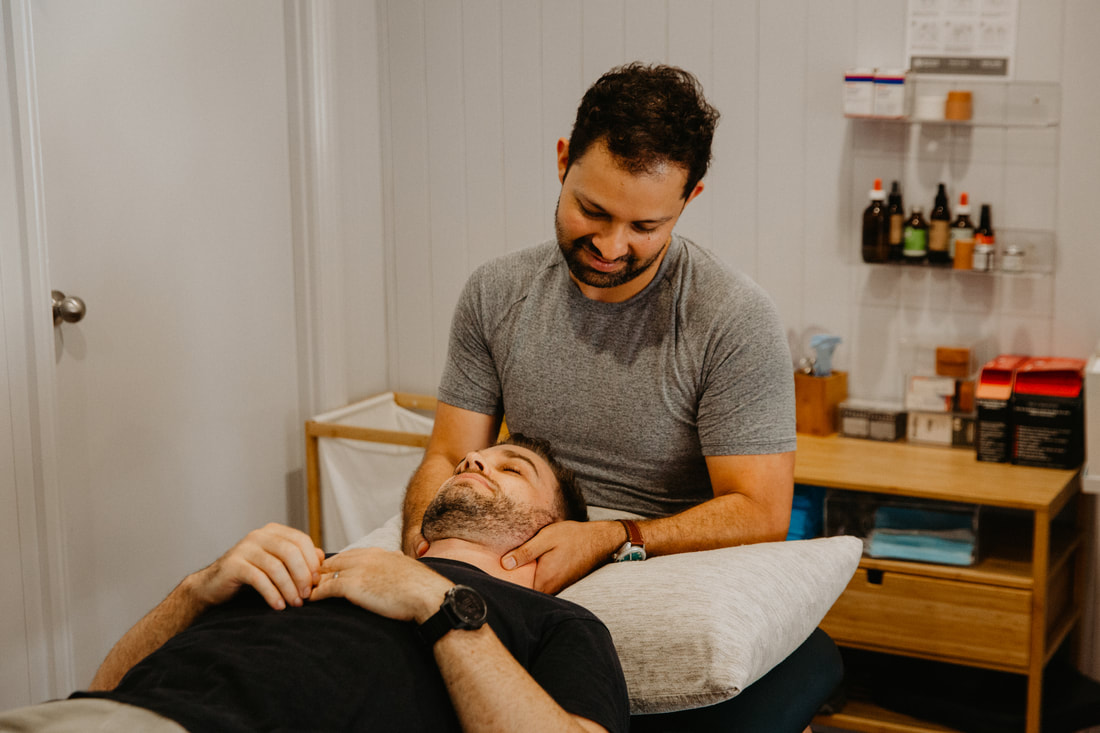
Cervical rehabilitation addresses the overuse patterns of defensive head movement — deep cervical flexor retraining, thoracic mobility and postural correction addressing the mechanical factors that drive cervical pain in regular sparrers. Manual therapy targets the cervical and upper thoracic joint restrictions that develop from sustained boxing training loads.
Concussion management follows our structured protocol — vestibular rehabilitation, cervical physiotherapy and graduated return-to-contact exposure — with return to sparring requiring both clinical clearance and a structured graduated contact progression rather than a simple time-based approach.
Trunk rotation mechanics — improving thoracic rotation, hip mobility and lumbopelvic stabiliser function — addresses both the lower back pain and the performance limitation that comes from inadequate trunk rotation in punching mechanics. Better rotation mechanics means both less lumbar stress and more powerful punches.
Dry needling manages the forearm extensor, periscapular, paraspinal and cervical trigger points common in boxers. Clinical Pilates provides trunk rotation, shoulder stabiliser and hip control work relevant to boxing performance. Real time ultrasound guides deep cervical and lumbar stabiliser retraining.
Our physiotherapists Mauricio Bara and Emma Cameron both have experience in combat sport injuries and are members of the Australian Physiotherapy Association. Mauricio's APA Sports Physiotherapist credentials and experience in complex performance cases are directly relevant to the return-to-contact decision-making central to boxing injury management.
To book or find out more, call us on 07 3706 3407 or book online below. We see patients from across Brisbane's southside including Tarragindi, Coorparoo, Holland Park, Greenslopes and Mt Gravatt.
Boxing is a combat sport combining explosive upper body striking, defensive head movement, footwork and the sustained aerobic and anaerobic demands of rounds lasting two to three minutes with minimal recovery. Whether practiced as competitive amateur or professional boxing, white collar fitness boxing or technical skill training, boxing places significant demands on the hands, wrists, shoulders, neck and core — and the contact sport environment of sparring adds the collision and impact exposures that produce the sport's acute injury profile.
At Articulate Physiotherapy in Tarragindi, we work with boxers across all formats and levels — from fitness boxers who train for health and skill through to competitive amateur and professional fighters — managing the acute injuries that interrupt training camps and the chronic overuse injuries that accumulate across boxing careers.
Common boxing injuries
Hand and wrist injuries are the most common injury in boxing and the most frequently undertreated. The impact forces transmitted through the fist at the moment of contact are substantial — and incorrect fist alignment, poor wrapping technique or inadequate glove selection amplify these forces significantly. Metacarpal fractures — particularly the fourth and fifth metacarpal (boxer's fracture) from impact with a misaligned fist — are the most common acute fracture. Wrist sprains from hyperextension on missed or blocked punches and De Quervain's tenosynovitis from the grip and rotation demands of punching are common overuse presentations. Adequate wrapping technique and appropriate glove selection are the most important preventive measures — and advice on these is a routine part of boxing physiotherapy management.
Shoulder injuries — rotator cuff tendinopathy from the high punching volumes of boxing training, shoulder impingement from the overhead and horizontal striking mechanics, and AC joint injuries from blocking and defensive contact in sparring — are common in high-volume boxers. The rapid deceleration of the punching follow-through places significant eccentric demand on the posterior rotator cuff, producing the characteristic overuse pattern in the decelerating muscles of experienced fighters.
Neck and cervical spine injuries — cervical muscle strains, cervicogenic headache and whiplash-type presentations from head contact and defensive head movement — are common in boxers who spar regularly. The repeated submaximal head movements of defensive boxing — slipping, rolling and ducking — load the cervical spine in sustained flexion and rotation patterns that produce cervical overuse presentations distinct from the acute impact injuries of head contact.
Concussion — from head contact in sparring and competition — is the most clinically significant injury in boxing and requires the same structured concussion management approach as any contact sport, including vestibular rehabilitation, cervical assessment and graduated return-to-contact protocols. Any head contact producing symptoms requires immediate removal from sparring and appropriate clinical assessment before return — there is no acceptable "walking it off" in boxing concussion management.
Elbow injuries — hyperextension from overextended jabs and crosses, and lateral epicondylalgia from the forearm extensor loading of the punching action — are common in high-volume punchers. The rapid extension of the elbow at punch completion places the elbow at hyperextension risk when punches miss or are partially blocked.
Lower back pain from the repeated trunk rotation of punching power generation — lumbar facet joint syndrome and paraspinal overuse — is common in fighters who generate power predominantly through the lumbar spine rather than through efficient hip and thoracic rotation mechanics. Improving trunk rotation mechanics is both a rehabilitation and a performance intervention for boxers with lower back pain.
Knee and ankle injuries from the footwork demands of boxing — lateral ankle sprains from pivoting and direction change, and knee pain from the sustained semi-flexed stance position of boxing — are more common in competition boxers who perform high volumes of ring work and sparring.
How can physiotherapy help?
Physiotherapy for boxing injuries addresses the specific striking mechanics, defensive movement patterns and contact sport demands of the sport alongside general upper limb and spinal rehabilitation principles.
Hand and wrist rehabilitation — including fracture management, ligament rehabilitation and return-to-training wrapping and glove advice — is one of the most important and most boxing-specific physiotherapy contributions. Returning to bag work and sparring with inadequately healed hand injuries is one of the most common causes of chronic hand problems in boxers, and structured rehabilitation with clear return-to-training criteria prevents this.
Shoulder rehabilitation addresses the rotator cuff deceleration strength deficits that develop from high-volume punching — the posterior rotator cuff braking mechanism is the primary injury prevention target for boxing shoulder health. Periscapular strengthening and scapular control work improve the shoulder's ability to withstand the repeated impact forces of bag and pad work.
Cervical rehabilitation addresses the overuse patterns of defensive head movement — deep cervical flexor retraining, thoracic mobility and postural correction addressing the mechanical factors that drive cervical pain in regular sparrers. Manual therapy targets the cervical and upper thoracic joint restrictions that develop from sustained boxing training loads.
Concussion management follows our structured protocol — vestibular rehabilitation, cervical physiotherapy and graduated return-to-contact exposure — with return to sparring requiring both clinical clearance and a structured graduated contact progression rather than a simple time-based approach.
Trunk rotation mechanics — improving thoracic rotation, hip mobility and lumbopelvic stabiliser function — addresses both the lower back pain and the performance limitation that comes from inadequate trunk rotation in punching mechanics. Better rotation mechanics means both less lumbar stress and more powerful punches.
Dry needling manages the forearm extensor, periscapular, paraspinal and cervical trigger points common in boxers. Clinical Pilates provides trunk rotation, shoulder stabiliser and hip control work relevant to boxing performance. Real time ultrasound guides deep cervical and lumbar stabiliser retraining.
Our physiotherapists Mauricio Bara and Emma Cameron both have experience in combat sport injuries and are members of the Australian Physiotherapy Association. Mauricio's APA Sports Physiotherapist credentials and experience in complex performance cases are directly relevant to the return-to-contact decision-making central to boxing injury management.
To book or find out more, call us on 07 3706 3407 or book online below. We see patients from across Brisbane's southside including Tarragindi, Coorparoo, Holland Park, Greenslopes and Mt Gravatt.
Who to book in with:
Ash O'Regan
|
Emma Cameron
|
Mauricio Bara
|