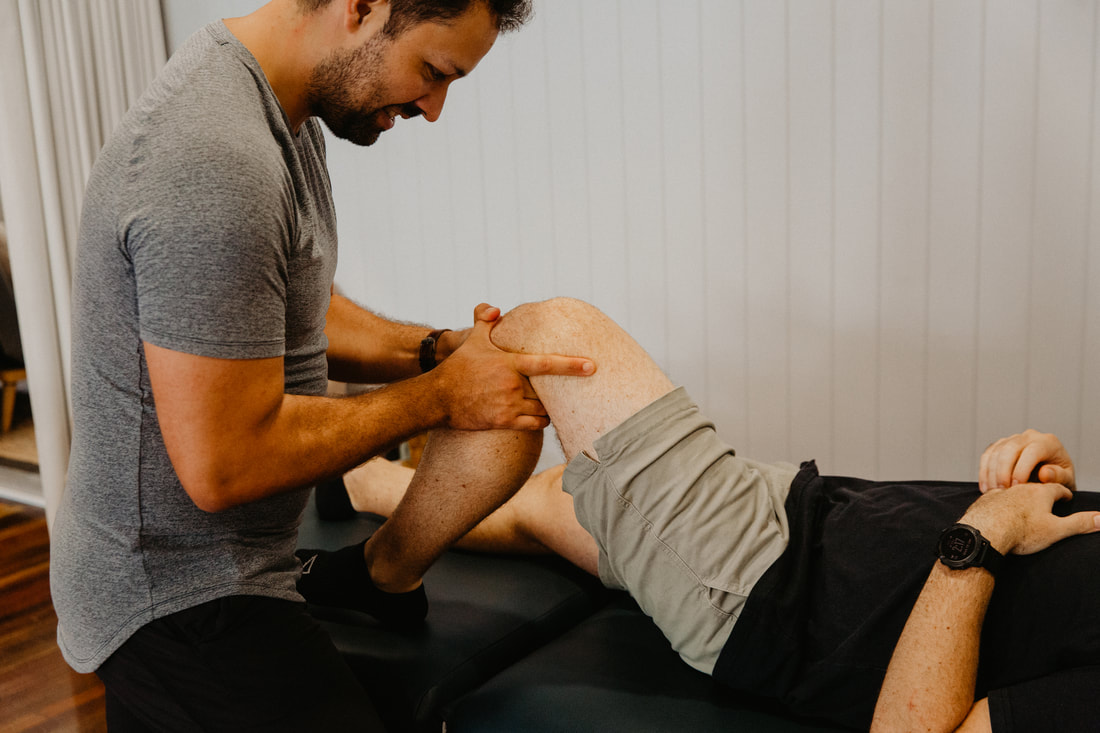
Netball Physiotherapy.
The physical demands of netball
Netball is Australia's most popular female team sport, with participation spanning school-age players through to masters competition. It is a sport of explosive, repeated short-distance efforts — acceleration, deceleration, jumping, landing and sudden direction changes — performed on a hard court surface without the continuous running that characterises many other field sports. The no-running rule means that netball movement is almost entirely composed of the high-impact, high-load actions — jumping and landing — that place the greatest demand on the lower limb. The result is one of the highest rates of lower limb injury of any team sport, and a very specific and well-documented injury profile.
At Articulate Physiotherapy in Tarragindi, we see netball players from all grades and age groups — from school competitions through to state-level performers — managing both the acute injuries that disrupt seasons and the overuse injuries that develop from the cumulative loading of weekly training and competition.
Common netball injuries
Ankle injuries are the most common injury in netball — accounting for approximately 40% of all netball injuries — primarily lateral ankle ligament sprains from landing and pivoting. The high court surface, jumping demands and the physical contact of defensive play all contribute to ankle injury risk. The single most important clinical fact about netball ankle sprains is the recurrence rate — without structured rehabilitation including proprioceptive retraining, approximately 40% of netball ankle sprains recur within the same season. An ankle sprain that is strapped and returned to play without physiotherapy is not an ankle sprain that has been treated.
Knee injuries — particularly ACL tears — are the most serious and most discussed injuries in netball. Female athletes in jump-landing sports have a significantly higher ACL injury rate than male athletes in equivalent sports, and netball's combination of jumping, landing and pivoting on hard courts makes it one of the highest-risk sports for ACL injury in Australia. The landing mechanics that predispose to ACL injury — knee valgus collapse on landing, reduced knee flexion at landing, and lateral trunk lean — are the primary targets of ACL injury prevention programs, and physiotherapy-based screening and movement correction programs have strong evidence for reducing ACL injury rates in netball.
Patellofemoral pain syndrome and patellar tendinopathy — from the repeated jumping and landing demands — are the most common chronic knee presentations in netball, particularly in goal shooters and goal keepers who perform the highest jumping volumes.
Finger and hand injuries — dislocations, fractures and ligament injuries from ball handling and intercept attempts — are extremely common in netball and are one of the most frequently undertreated injury categories. A "jammed finger" that is not properly assessed may involve a significant joint injury that, if untreated, produces chronic instability and functional limitation.
Shoulder injuries — rotator cuff tendinopathy and impingement from the overhead shooting and passing demands, particularly in shooters and centres — develop from the cumulative loading of high training volumes. Shoulder conditioning and rotator cuff strengthening are as important for netball players as lower limb conditioning.
Calf strains and Achilles tendinopathy — from the explosive acceleration and deceleration demands of netball — are common particularly in older players and those returning from breaks. The sudden explosive push-off demands of netball make the calf-Achilles complex a consistent injury site.
Stress fractures of the metatarsals and tibia — from the high-impact loading of hard court netball without adequate load management — occur particularly in players who increase their training volume rapidly or return from breaks without graduated loading.
Growth-related conditions in junior players — Osgood-Schlatter disease and Sever's disease — are common in the 10 to 15 year age group from the jumping and landing demands of junior netball.
How can physiotherapy help?
Physiotherapy for netball injuries addresses the specific court movement demands of the sport — the jump-landing mechanics, the explosive acceleration and deceleration, the pivoting and direction-change patterns — that determine both injury risk and performance quality.
Landing mechanics assessment and retraining — addressing the knee valgus, trunk lean and reduced knee flexion patterns that both predispose to ACL injury and reduce performance — is one of the most important physiotherapy contributions to netball. Structured landing technique programs reduce ACL injury risk and improve jumping and landing performance simultaneously. Hip abductor and gluteal strengthening is the primary exercise target for improving landing mechanics and reducing dynamic valgus.
Progressive ankle rehabilitation following sprains — moving well beyond simple strengthening to include proprioceptive retraining, balance challenges and sport-specific movement rehabilitation — is the most important intervention for reducing recurrence. Ankle bracing provides additional protection for players returning to competition after ankle injury.
Manual therapy addresses joint restrictions and soft tissue tightness that develop from the asymmetric loading patterns of netball — particularly thoracic and hip mobility that influences landing mechanics and jumping performance. Dry needling manages calf, gluteal and periscapular trigger points. Real time ultrasound guides deep hip stabiliser and VMO retraining where pain and injury have disrupted normal activation patterns.
Clinical Pilates provides excellent hip, gluteal and core strengthening work directly relevant to netball performance and injury prevention. Court-specific rehabilitation — progressive return to court movement, jumping and landing drills, and graduated return to training and competition — ensures return to netball is structured and criteria-based.
Our physiotherapists Mauricio Bara, Eliane Machado and Emma Cameron all have experience in netball-related injuries and are members of the Australian Physiotherapy Association. Eliane's doctoral research in lower limb biomechanics is directly relevant to the landing mechanics assessment and knee rehabilitation central to netball injury management.
To book or find out more, call us on 07 3706 3407 or book online below. We see patients from across Brisbane's southside including Tarragindi, Coorparoo, Holland Park, Greenslopes and Mt Gravatt.
Netball is Australia's most popular female team sport, with participation spanning school-age players through to masters competition. It is a sport of explosive, repeated short-distance efforts — acceleration, deceleration, jumping, landing and sudden direction changes — performed on a hard court surface without the continuous running that characterises many other field sports. The no-running rule means that netball movement is almost entirely composed of the high-impact, high-load actions — jumping and landing — that place the greatest demand on the lower limb. The result is one of the highest rates of lower limb injury of any team sport, and a very specific and well-documented injury profile.
At Articulate Physiotherapy in Tarragindi, we see netball players from all grades and age groups — from school competitions through to state-level performers — managing both the acute injuries that disrupt seasons and the overuse injuries that develop from the cumulative loading of weekly training and competition.
Common netball injuries
Ankle injuries are the most common injury in netball — accounting for approximately 40% of all netball injuries — primarily lateral ankle ligament sprains from landing and pivoting. The high court surface, jumping demands and the physical contact of defensive play all contribute to ankle injury risk. The single most important clinical fact about netball ankle sprains is the recurrence rate — without structured rehabilitation including proprioceptive retraining, approximately 40% of netball ankle sprains recur within the same season. An ankle sprain that is strapped and returned to play without physiotherapy is not an ankle sprain that has been treated.
Knee injuries — particularly ACL tears — are the most serious and most discussed injuries in netball. Female athletes in jump-landing sports have a significantly higher ACL injury rate than male athletes in equivalent sports, and netball's combination of jumping, landing and pivoting on hard courts makes it one of the highest-risk sports for ACL injury in Australia. The landing mechanics that predispose to ACL injury — knee valgus collapse on landing, reduced knee flexion at landing, and lateral trunk lean — are the primary targets of ACL injury prevention programs, and physiotherapy-based screening and movement correction programs have strong evidence for reducing ACL injury rates in netball.
Patellofemoral pain syndrome and patellar tendinopathy — from the repeated jumping and landing demands — are the most common chronic knee presentations in netball, particularly in goal shooters and goal keepers who perform the highest jumping volumes.
Finger and hand injuries — dislocations, fractures and ligament injuries from ball handling and intercept attempts — are extremely common in netball and are one of the most frequently undertreated injury categories. A "jammed finger" that is not properly assessed may involve a significant joint injury that, if untreated, produces chronic instability and functional limitation.
Shoulder injuries — rotator cuff tendinopathy and impingement from the overhead shooting and passing demands, particularly in shooters and centres — develop from the cumulative loading of high training volumes. Shoulder conditioning and rotator cuff strengthening are as important for netball players as lower limb conditioning.
Calf strains and Achilles tendinopathy — from the explosive acceleration and deceleration demands of netball — are common particularly in older players and those returning from breaks. The sudden explosive push-off demands of netball make the calf-Achilles complex a consistent injury site.
Stress fractures of the metatarsals and tibia — from the high-impact loading of hard court netball without adequate load management — occur particularly in players who increase their training volume rapidly or return from breaks without graduated loading.
Growth-related conditions in junior players — Osgood-Schlatter disease and Sever's disease — are common in the 10 to 15 year age group from the jumping and landing demands of junior netball.
How can physiotherapy help?
Physiotherapy for netball injuries addresses the specific court movement demands of the sport — the jump-landing mechanics, the explosive acceleration and deceleration, the pivoting and direction-change patterns — that determine both injury risk and performance quality.
Landing mechanics assessment and retraining — addressing the knee valgus, trunk lean and reduced knee flexion patterns that both predispose to ACL injury and reduce performance — is one of the most important physiotherapy contributions to netball. Structured landing technique programs reduce ACL injury risk and improve jumping and landing performance simultaneously. Hip abductor and gluteal strengthening is the primary exercise target for improving landing mechanics and reducing dynamic valgus.
Progressive ankle rehabilitation following sprains — moving well beyond simple strengthening to include proprioceptive retraining, balance challenges and sport-specific movement rehabilitation — is the most important intervention for reducing recurrence. Ankle bracing provides additional protection for players returning to competition after ankle injury.
Manual therapy addresses joint restrictions and soft tissue tightness that develop from the asymmetric loading patterns of netball — particularly thoracic and hip mobility that influences landing mechanics and jumping performance. Dry needling manages calf, gluteal and periscapular trigger points. Real time ultrasound guides deep hip stabiliser and VMO retraining where pain and injury have disrupted normal activation patterns.
Clinical Pilates provides excellent hip, gluteal and core strengthening work directly relevant to netball performance and injury prevention. Court-specific rehabilitation — progressive return to court movement, jumping and landing drills, and graduated return to training and competition — ensures return to netball is structured and criteria-based.
Our physiotherapists Mauricio Bara, Eliane Machado and Emma Cameron all have experience in netball-related injuries and are members of the Australian Physiotherapy Association. Eliane's doctoral research in lower limb biomechanics is directly relevant to the landing mechanics assessment and knee rehabilitation central to netball injury management.
To book or find out more, call us on 07 3706 3407 or book online below. We see patients from across Brisbane's southside including Tarragindi, Coorparoo, Holland Park, Greenslopes and Mt Gravatt.
Who to book in with:
Emma Cameron
|
Ash O'Regan
|
Dr Eliane Machado PhD
|