Pregnancy Physiotherapy.
Physiotherapy for a more comfortable pregnancy
Pregnancy is one of the most physically demanding periods of a woman's life. The rapid changes in posture, weight distribution, hormonal environment and musculoskeletal loading that occur across 40 weeks produce a range of physical complaints that, while common, are not simply inevitable. Physiotherapy during pregnancy is safe, evidence-based and highly effective for the majority of pregnancy-related physical presentations — and early treatment consistently produces better outcomes than waiting and hoping things settle on their own.
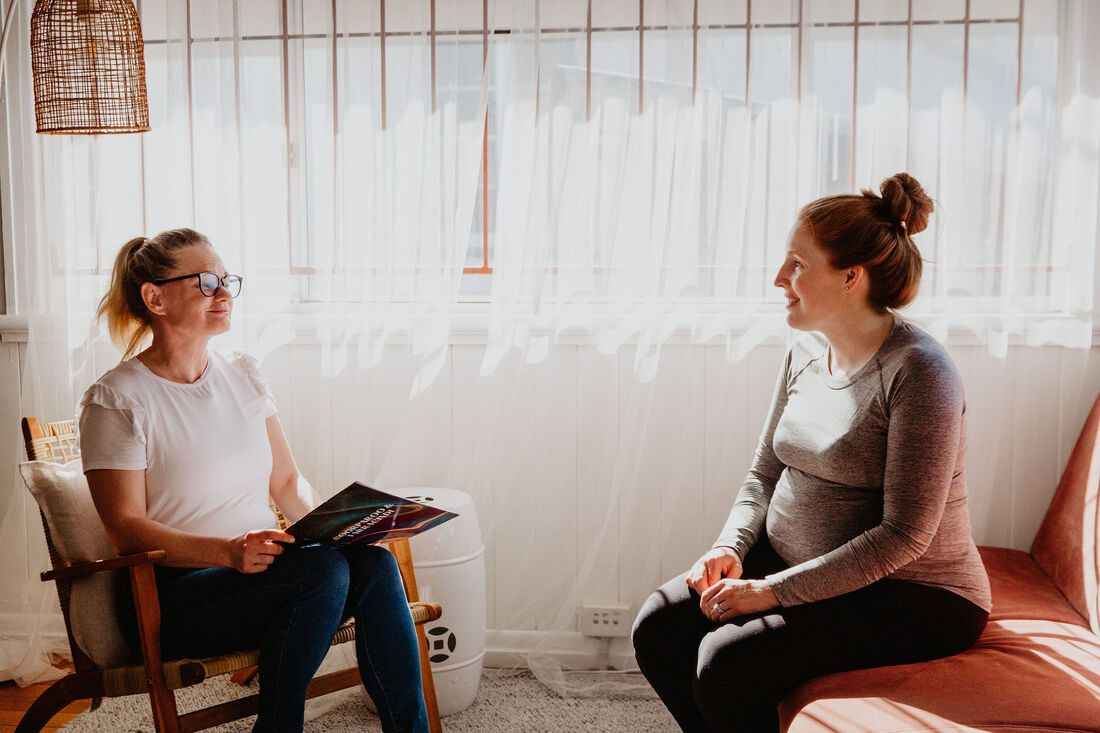
At Articulate Physiotherapy in Tarragindi, our team provides personalised pregnancy physiotherapy in a calm and welcoming environment. We understand the unique physical demands of pregnancy and work with women across all three trimesters — from early pregnancy musculoskeletal changes through to late pregnancy pain management and birth preparation.
What conditions does pregnancy physiotherapy treat?
Pregnancy-related back pain affects approximately 50 to 80% of pregnant women. As the uterus expands and the centre of gravity shifts forward, the lumbar spine increases its lordosis and the paraspinal muscles work harder to maintain upright posture — producing the aching lower back pain that is one of the most common pregnancy complaints. Physiotherapy addresses this through manual therapy, deep core retraining, postural education and support garment prescription.
Pelvic girdle pain (PGP) — pain in the sacroiliac joints, pubic symphysis and surrounding structures from relaxin-mediated ligamentous laxity — is one of the most disabling pregnancy presentations. Pain with walking, climbing stairs, rolling over in bed and single-leg activities is characteristic. Early physiotherapy assessment and load management significantly reduces the functional impact of PGP. For symphysis pubis dysfunction specifically, see our SPD page.
Postural changes during pregnancy — increasing thoracic kyphosis, lumbar lordosis and forward head posture — contribute to neck pain, upper back pain and rib pain that compounds as pregnancy progresses. Postural correction exercises, thoracic mobility work and ergonomic advice address these systematically.
Sciatica and leg pain — radiating pain, numbness or tingling down the leg from lumbar nerve root or piriformis compression — is common in the second and third trimesters. Physiotherapy identifies the specific source — whether lumbar disc, piriformis or other — and provides targeted management safe for pregnancy.
Rib pain — from the expanding uterus lifting the diaphragm and increasing lower rib loading — produces sharp or aching lateral thoracic pain in the second and third trimesters that responds well to manual therapy, breathing retraining and postural work.
Diastasis recti (abdominal separation) develops in the majority of women during the second and third trimester as the linea alba stretches to accommodate the growing uterus. Real time ultrasound directly visualises the separation and guides safe abdominal loading strategies during pregnancy.
Carpal tunnel syndrome — wrist pain, numbness and tingling in the thumb and first three fingers from fluid retention compressing the median nerve — is common in the second and third trimesters and often responds to splinting, nerve mobilisation and activity modification.
Round ligament pain — sharp groin or lower abdominal pain from the stretching of the round ligaments — is common in the second trimester and usually managed with activity modification and manual therapy.
Pelvic floor dysfunction during pregnancy — urinary leakage, urgency or heaviness — benefits from assessment and management. While internal pelvic floor assessment is outside our current scope, we address the external musculoskeletal contributors and refer to specialist pelvic floor physiotherapists where internal assessment is clinically indicated.
How can physiotherapy help?
Physiotherapy treatment during pregnancy is adapted for each trimester, the patient's symptoms and functional goals, and the safe exercise parameters for pregnancy. All treatment approaches and positions are modified for safety and comfort as pregnancy progresses.
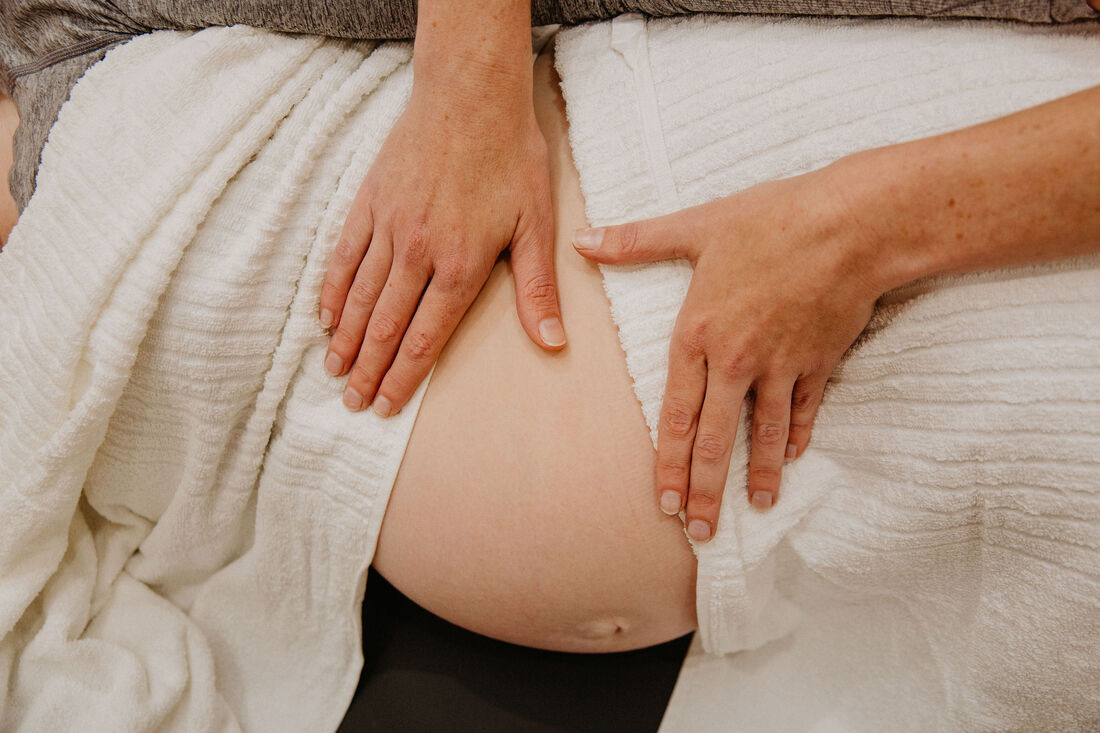
Manual therapy — soft tissue techniques, joint mobilisation and myofascial release — reduces pain and restores movement in the joints and muscles most affected by pregnancy postural loading. All techniques are adapted for pregnancy safety and comfort. Real time ultrasound guides deep core and pelvic floor retraining with a precision that verbal cueing alone cannot achieve — it directly visualises muscle activation and confirms correct technique.
Exercise prescription — a progressive program addressing the specific deficits identified at assessment, including deep stabiliser retraining, hip and gluteal strengthening and thoracic mobility work — addresses the underlying contributors to pain rather than managing symptoms alone.
Postural and ergonomic advice — sleeping positions, workstation setup, lifting technique, activity pacing and support garment prescription — reduces the daily mechanical load on the structures most affected by pregnancy.
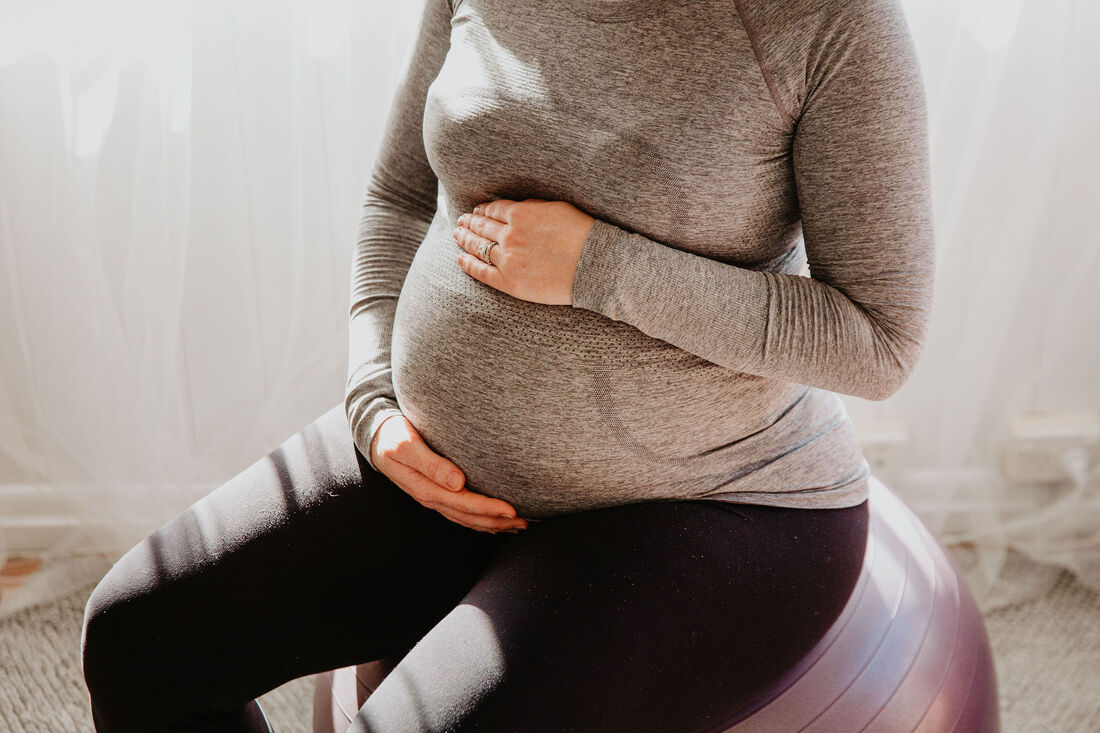
Clinical Pilates adapted for pregnancy provides structured, supervised exercise that builds the core strength, pelvic floor function and body awareness that support a comfortable pregnancy and faster postnatal recovery. Our Prenatal Pilates 8-week course is specifically designed for pregnant women and provides ongoing supervised exercise support throughout pregnancy in a small group format.
Postnatal physiotherapy
The support doesn't stop at birth. Our team provides comprehensive postnatal physiotherapy including diastasis recti rehabilitation, postnatal back pain management, return to exercise guidance, caesarean scar management and return to running assessment. See our postnatal physiotherapy page for detail.
Our physiotherapists Bethany Kippen and Emma Cameron both have experience in pregnancy-related conditions and are members of the Australian Physiotherapy Association. Emma's background in exercise science and her specific interest in prenatal and postnatal care makes her particularly well placed for pregnancy presentations where exercise prescription and load management are central to management.
To book or find out more, call us on 07 3706 3407 or book online below. We see patients from across Brisbane's southside including Tarragindi, Coorparoo, Holland Park, Greenslopes and Mt Gravatt.
Pregnancy is one of the most physically demanding periods of a woman's life. The rapid changes in posture, weight distribution, hormonal environment and musculoskeletal loading that occur across 40 weeks produce a range of physical complaints that, while common, are not simply inevitable. Physiotherapy during pregnancy is safe, evidence-based and highly effective for the majority of pregnancy-related physical presentations — and early treatment consistently produces better outcomes than waiting and hoping things settle on their own.
At Articulate Physiotherapy in Tarragindi, our team provides personalised pregnancy physiotherapy in a calm and welcoming environment. We understand the unique physical demands of pregnancy and work with women across all three trimesters — from early pregnancy musculoskeletal changes through to late pregnancy pain management and birth preparation.
What conditions does pregnancy physiotherapy treat?
Pregnancy-related back pain affects approximately 50 to 80% of pregnant women. As the uterus expands and the centre of gravity shifts forward, the lumbar spine increases its lordosis and the paraspinal muscles work harder to maintain upright posture — producing the aching lower back pain that is one of the most common pregnancy complaints. Physiotherapy addresses this through manual therapy, deep core retraining, postural education and support garment prescription.
Pelvic girdle pain (PGP) — pain in the sacroiliac joints, pubic symphysis and surrounding structures from relaxin-mediated ligamentous laxity — is one of the most disabling pregnancy presentations. Pain with walking, climbing stairs, rolling over in bed and single-leg activities is characteristic. Early physiotherapy assessment and load management significantly reduces the functional impact of PGP. For symphysis pubis dysfunction specifically, see our SPD page.
Postural changes during pregnancy — increasing thoracic kyphosis, lumbar lordosis and forward head posture — contribute to neck pain, upper back pain and rib pain that compounds as pregnancy progresses. Postural correction exercises, thoracic mobility work and ergonomic advice address these systematically.
Sciatica and leg pain — radiating pain, numbness or tingling down the leg from lumbar nerve root or piriformis compression — is common in the second and third trimesters. Physiotherapy identifies the specific source — whether lumbar disc, piriformis or other — and provides targeted management safe for pregnancy.
Rib pain — from the expanding uterus lifting the diaphragm and increasing lower rib loading — produces sharp or aching lateral thoracic pain in the second and third trimesters that responds well to manual therapy, breathing retraining and postural work.
Diastasis recti (abdominal separation) develops in the majority of women during the second and third trimester as the linea alba stretches to accommodate the growing uterus. Real time ultrasound directly visualises the separation and guides safe abdominal loading strategies during pregnancy.
Carpal tunnel syndrome — wrist pain, numbness and tingling in the thumb and first three fingers from fluid retention compressing the median nerve — is common in the second and third trimesters and often responds to splinting, nerve mobilisation and activity modification.
Round ligament pain — sharp groin or lower abdominal pain from the stretching of the round ligaments — is common in the second trimester and usually managed with activity modification and manual therapy.
Pelvic floor dysfunction during pregnancy — urinary leakage, urgency or heaviness — benefits from assessment and management. While internal pelvic floor assessment is outside our current scope, we address the external musculoskeletal contributors and refer to specialist pelvic floor physiotherapists where internal assessment is clinically indicated.
How can physiotherapy help?
Physiotherapy treatment during pregnancy is adapted for each trimester, the patient's symptoms and functional goals, and the safe exercise parameters for pregnancy. All treatment approaches and positions are modified for safety and comfort as pregnancy progresses.
Manual therapy — soft tissue techniques, joint mobilisation and myofascial release — reduces pain and restores movement in the joints and muscles most affected by pregnancy postural loading. All techniques are adapted for pregnancy safety and comfort. Real time ultrasound guides deep core and pelvic floor retraining with a precision that verbal cueing alone cannot achieve — it directly visualises muscle activation and confirms correct technique.
Exercise prescription — a progressive program addressing the specific deficits identified at assessment, including deep stabiliser retraining, hip and gluteal strengthening and thoracic mobility work — addresses the underlying contributors to pain rather than managing symptoms alone.
Postural and ergonomic advice — sleeping positions, workstation setup, lifting technique, activity pacing and support garment prescription — reduces the daily mechanical load on the structures most affected by pregnancy.
Clinical Pilates adapted for pregnancy provides structured, supervised exercise that builds the core strength, pelvic floor function and body awareness that support a comfortable pregnancy and faster postnatal recovery. Our Prenatal Pilates 8-week course is specifically designed for pregnant women and provides ongoing supervised exercise support throughout pregnancy in a small group format.
Postnatal physiotherapy
The support doesn't stop at birth. Our team provides comprehensive postnatal physiotherapy including diastasis recti rehabilitation, postnatal back pain management, return to exercise guidance, caesarean scar management and return to running assessment. See our postnatal physiotherapy page for detail.
Our physiotherapists Bethany Kippen and Emma Cameron both have experience in pregnancy-related conditions and are members of the Australian Physiotherapy Association. Emma's background in exercise science and her specific interest in prenatal and postnatal care makes her particularly well placed for pregnancy presentations where exercise prescription and load management are central to management.
To book or find out more, call us on 07 3706 3407 or book online below. We see patients from across Brisbane's southside including Tarragindi, Coorparoo, Holland Park, Greenslopes and Mt Gravatt.
Who to book in with:
Emma Cameron
|
Bethany Kippen
|
If you are unsure about which appointment type is right for you, please don't hesitate to get in touch with our friendly reception staff by calling 07 3706 3407 or emailing [email protected].
We accept CDMs | EPCs and Workcover referrals - contact us to find out more!