articulate.
  • HOME
    • Our Team >
      • Mauricio Bara
      • Ash O'Regan
      • Bethany Kippen (nee Bethany Dick)
      • Eliane Machado
      • Emma Cameron
      • Yulia Khasyanova
  • BOOKINGS
    • Patient Portal
  • PHYSIOTHERAPY SERVICES
    • Physiotherapy Services & Pricing >
      • Physiotherapy FAQs
      • Pregnancy Physiotherapy
      • Postnatal Physiotherapy
      • Mastitis Physiotherapy
    • Physiotherapy for Teenagers
    • GP Chronic Condition Management Plan Physiotherapy
    • CTP Physiotherapy
    • Dance Physiotherapy >
      • Pre-Pointe Assessments
    • Dry Needling
    • DVA Physiotherapy
    • NDIS Physiotherapy
    • Real Time Ultrasound
    • Telehealth Online Physiotherapy
    • Workcover Physiotherapy
  • EXERCISE PHYSIOLOGY SERVICES
    • Exercise Physiology Services & Pricing
    • GP Chronic Condition Management Plan Exercise Physiology
    • CTP Exercise Physiology
    • DVA Exercise Physiology
    • NDIS Exercise Physiology
    • Workcover Exercise Physiology
  • PHYSIO & EX PHYS LED PILATES
    • Clinical Exercise Class Timetable & Pricing
    • Balance & Bones Exercise Classes
    • Diabetes Management Exercise Classes
    • Prenatal Pilates 8 Week Course >
      • Prenatal Pilates FAQs
    • Mums & Bubs Postnatal 8 Week Block >
      • Mums & Bubs Pilates FAQs
  • GENERAL PILATES
    • Reformer Pilates Timetable
    • Pilates Pricing & Passes
    • Pilates FAQs
    • Memberships
    • Pilates Privates
    • Pilates Health Fund Claiming
  • CONDITIONS WE TREAT
    • Arthritis >
      • Ankle Osteoarthritis
      • Rheumatoid Arthritis
      • Shoulder Arthritis
      • Spondyloarthropathies and Ankylosing Spondylitis
      • Osteoarthritis of the Hip
    • Spine & Back >
      • Ankylosing Spondylitis
      • Degenerative Disc Disease
      • Herniated Discs
      • Sciatica
      • Spondylolysis and Spondylolisthesis
      • Kyphosis
      • Facet Joint Syndrome
      • Spinal Stenosis
      • Sacroiliac Joint Dysfunction
      • Sacroiliitis and SIJ Pain
    • Sprains and Strains >
      • Calf Strain
      • Groin Strains
      • Ligament Sprains
      • Muscle Strains
      • Repetitive Strain Injury
    • Foot and Ankle Pain >
      • Achilles Tendinopathy
      • Bunions
      • Flat Feet
      • Hammer, Claw & Mallet Toes
      • Heel Spurs
      • Metatarsalgia
      • Morton's Neuroma
      • Plantar Fasciitis
      • Posterior Tibial Tendon Dysfunction (PTTD)
      • Sesamoiditis
      • Stress Fractures
      • Tarsal Tunnel Syndrome
    • Calf Pain >
      • Shin Splints | Medial tibial stress syndrome (MTSS)
    • Knee Pain >
      • Anterior Cruciate Ligament (ACL) Injuries
      • Baker's Cyst
      • Chondromalacia Patella
      • Iliotibial Band Syndrome
      • Lateral Collateral Ligament (LCL) Injuries
      • Ligamentous Laxity or Hypermobility of the Knee
      • Jumper's Knee (Patellar Tendinopathy)
      • Medial Collateral Ligament (MCL) Injuries
      • Meniscal Tears
      • Osteoarthritis of the Knee
      • Knee Gout
      • Knee Dislocations
      • Knee Bursitis
      • Patellofemoral Pain Syndrome
      • Posterior Cruciate Ligament (PCL) Injuries
      • Quadriceps Tendon Tear
    • Hip Pain >
      • Pelvic Girdle Pain
      • Labral Tears
      • Gluteal Tendinopathy
      • Hip Bursitis
      • Piriformis Syndrome
      • Femoroacetabular Impingment Syndrome | FAI
      • Greater Trochanteric Pain Syndrome (GTPS)
      • Hip Adductor Strain
      • Hip Fractures
      • Hip Flexor Strain
      • Snapping Hip Syndrome
    • Neck Pain >
      • Atlantoaxial Instability
      • Thoracic Outlet Syndrome
      • Cervical Instability
      • Cervical Myelopathy
      • Cervical Facet Joint Syndrome
      • Cervical Radiculopathy
      • Cervical Stenosis
      • Cervical Spondylosis
      • Cervical Disc Herniation
      • Cranio-Cervical Instability
      • Torticollis
      • Whiplash Treatment
    • Headaches and Migraines >
      • Cervicogenic Headache
    • TMJ and Jaw Pain
    • Wrist Pain >
      • Carpal Tunnel Syndrome
      • DeQuervain Tenosynovitis
    • Tennis Elbow
    • Shoulder Pain >
      • Acromioclavicular (AC) Joint Disorders
      • Brachial Plexus Injuries
      • Calcific Tendinitis
      • Frozen Shoulder
      • Glenohumeral Joint Instability
      • Rotator Cuff Injury
      • SLAP Tears (Superior Labrum Anterior to Posterior tears)
      • Shoulder Bursitis
      • Shoulder Dislocations
      • Shoulder Impingement
      • Winged Scapula
    • Bursitis
    • Fracture Rehabilitation
    • Growth related conditions >
      • Scheuermann's Disease
      • Sever's Disease
      • Osgood-Schlatter Disease
      • Sinding-Larsen-Johansson Syndrome
    • Performance Enhancement
    • Sports Injuries >
      • AFL
      • Athletic Throwing
      • Artistic Swimming
      • Baseball
      • Basketball
      • Beach Volleyball
      • Cricket
      • CrossFit
      • Cycling
      • Diving
      • Endurance Running
      • Futsal
      • Golf
      • Gymnastics
      • High Jump
      • Hockey
      • Karate
      • Kickboxing
      • Long Jump
      • MMA
      • Netball
      • Boxing
      • Pickleball
      • Powerlifting
      • Rock Climbing
      • Rowing
      • Rugby League
      • Rugby Union
      • Soccer
      • Softball
      • Strength Athletes
      • Sailing
      • Skiing
      • Snowboarding
      • Sprinting
      • Squash
      • Surfing
      • Swimming
      • Tennis
      • Touch Football
      • Triathlons
      • Volleyball
      • Water Polo
      • Weightlifting
      • Wrestling
      • Yoga
    • Chronic Pain >
      • CRPS
      • Chronic Fatigue Syndrome/Myalgic Encephalmyelitis
      • Fibromyalgia
      • Osteogenesis Imperfecta
    • Osteoporosis
    • Hypermobility >
      • Ehlers-Danlos Syndrome
      • Joint Hypermobility Syndrome
      • Loeys-Dietz Syndrome
      • Marfan Syndrome
      • Stickler Syndrome
    • POTS
    • Hypotension
    • Balance and Coordination >
      • Postural Disorders
      • Vestibular Disorders
    • Healthy Aging
    • Neurological Conditions >
      • Alzheimer's Disease
      • Concussions
      • Charcot-Marie-Tooth
      • Guillain-Barre Syndrome
      • Multiple Sclerosis
      • Peripheral Neuropathies
      • Parkinsons Disease
      • Stroke Rehabilitation
    • Post-Surgical Rehab >
      • Abdominoplasty
      • Achilles Tendon Rupture Repair
      • ACDF Rehabilitation
      • Acromioclavicular (AC) Joint Reconstruction
      • Ankle Ligament Repair
      • Anterior Ankle Impingement Surgery
      • Anterior Cruciate Ligament (ACL) Repair
      • Artificial Disc Replacement
      • Bunionectomy
      • Carpal Tunnel Release
      • Clavicle ORIF
      • Diastasis Recti Repair
      • Discectomy
      • Distal Biceps Tendon Repair
      • Flatfoot Reconstruction
      • Greater Trochanteric Repair
      • Hamstring Tendon Repair
      • Hernia Repair
      • Hip Arthroscopy
      • High Tibial Osteotomy
      • Fixations Following Fracture
      • Labral Repair
      • Laminectomy
      • LUCL Repair
      • Latarjet Procedure Rehabilitation
      • Lisfranc Injury Repair
      • Meniscus Repair
      • MPFL Reconstruction Rehabilitation
      • Neck of Femur Fracture Fixation
      • Osteochondral Grafting or Microfracture Surgery
      • Patellar Tendon Repair
      • Patellar Tendon Transfer
      • Pelvic Fracture Fixation
      • Posterior Cruciate Ligament (PCL) Reconstruction
      • Proximal Humerus ORIF
      • Quadriceps Tendon Repair
      • Rotator Cuff Repair
      • Reverse Total Shoulder Replacement Rehabilitation | Physio Brisbane Southside
      • Sacroiliac Joint Fusion
      • Scoliosis Repair
      • Shoulder Reconstruction
      • SLAP Lesion Repair
      • Spinal Fusion
      • Subacromial Decompression
      • Total Knee Replacement
      • Total Hip Replacement
      • Triple Arthrodesis
      • Ulnar Collateral Ligament Reconstruction
      • Scaphoid Fracture Fixation
      • Radial Head Replacement
      • Tendon Release
    • Women's Health Conditions >
      • Abdominal separation (rectus diastasis or DRAMS)
      • Menopause & Perimenopause
      • Polycystic Ovary Syndrome (PCOS) Physiotherapy
      • Pregnancy-Related Issues >
        • Pregnancy-Related Back Pain
        • Diastasis Recti (Abdominal Separation)
        • Pelvic Girdle Pain (Symphysis Pubis Dysfunction)
        • Postural Changes During Pregnancy
        • Return to Running After Pregnancy
    • Exercise After Bariatric Surgery
    • Exercise After Cancer Treatment
    • Semaglutides / GLP-1 & Exercise
  • CAREERS
  • BLOG
  • REFERRAL FORM
  • CONTACT US
  • GIFT VOUCHERS

Articulate Physiotherapy Tarragindi Blog.

Why rehab from an injury often isn’t linear

1/7/2021

0 Comments

 
Picture
The myth of the straight line
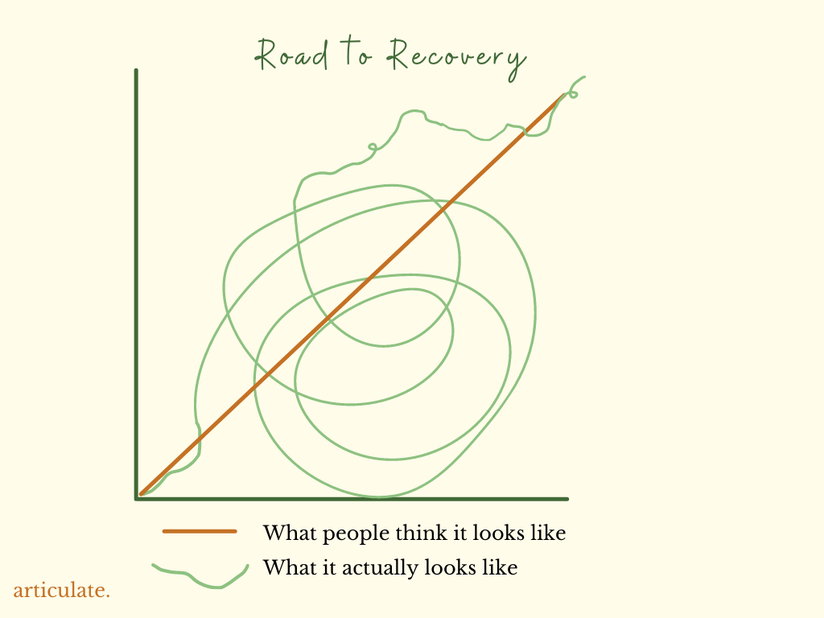
If you have ever been through physiotherapy rehabilitation — whether after surgery, injury or a flare-up of a chronic condition — you will almost certainly have experienced this: a run of good days followed by a bad day that feels like going back to square one. The temptation is to interpret that bad day as failure — as evidence that recovery has stalled, that something has gone wrong, or that the treatment isn't working. In almost every case, that interpretation is wrong.
​
Rehabilitation is not a straight line from injured to recovered. It never has been, and the expectation that it should be is one of the most consistently unhelpful ideas in physiotherapy — for both patients and clinicians. Understanding why recovery is non-linear, and what that means practically for how you manage your rehabilitation, is one of the most useful things your physiotherapist can help you with.
Picture

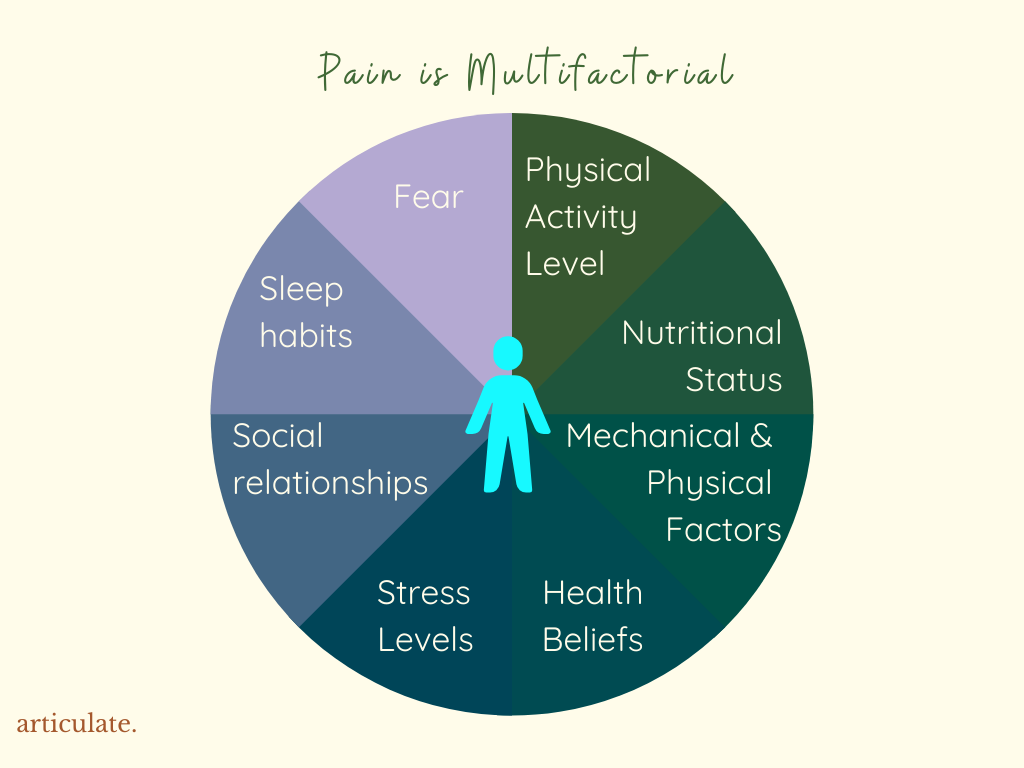
​What we know is that an injury and the pain experience that goes along with is incredibly complex and often multifactorial. How you experience pain and injury is specific to you – your body, your past experience, your expectations, your genetics, your mood, your diet, your sleeping patterns and probably a half dozen other little factors specific to you.
Picture

What non-linear rehabilitation actually means

The body's response to loading — whether that's exercise, manual therapy or simply the demands of daily activity — is not a smooth, consistent, predictable upward curve. Tissues heal in stages. The nervous system adapts to new movement patterns through repetition and progressive challenge. Strength builds through cycles of stress and recovery. Pain sensitivity fluctuates based on sleep, stress, activity levels, psychological state and dozens of other variables that have nothing to do with the structural state of the injured tissue.
This means that even when rehabilitation is going well — even when the trajectory over weeks and months is clearly positive — the day-to-day experience is variable. Some days feel like progress. Some days feel like regression. Both are normal components of a process that is, in aggregate, moving in the right direction.

The research on this is consistent across injury types. Patients recovering from ACL reconstruction, rotator cuff repair, chronic lower back pain and many other conditions show non-linear recovery trajectories — with significant variability from week to week even as the overall trend is toward better function. The patients who do best are those who understand this and manage their response to the bad days accordingly.
Why bad days happen — and why they don't mean what you think
Several factors commonly produce bad days in rehabilitation that are entirely unrelated to any genuine setback in tissue healing or functional recovery:

Sleep. Sleep deprivation increases pain sensitivity, reduces motor learning efficiency and elevates the central nervous system's threat response. A poor night's sleep before an exercise session or a difficult day at work will reliably produce a worse experience than the same session after adequate rest. This is not regression — it is a temporary modulation of the pain experience.
​
Stress. Psychological stress and anxiety are among the most powerful modulators of pain perception. The central sensitisation that underlies many persistent pain states is directly amplified by stress. A difficult week at work, a relationship conflict or financial pressure will often produce a temporary worsening of pain symptoms that has nothing to do with the structural state of the injury.

Increased activity. Counterintuitively, bad days in rehabilitation sometimes follow good days — because feeling better leads to doing more, and doing more produces a temporary tissue response that increases symptoms the next day. This load-response pattern is normal and expected. It is not injury. It is your tissues telling you where the current tolerance threshold is — useful information, not a catastrophe.

Cumulative fatigue. Progressive rehabilitation is designed to load tissues to the point of adaptation — which means working close to the current capacity threshold. Doing this consistently produces cumulative fatigue that can temporarily increase symptoms. This is the mechanism of progressive overload, which is how strength and conditioning works. Some degree of temporary symptom increase is a feature of effective rehabilitation, not a bug.

What to do with a bad day
The single most important skill in rehabilitation is interpreting a bad day correctly. The questions that determine the right response are:

Is this a familiar type of discomfort — one that has occurred before during rehabilitation — or is it a genuinely new or different pain? Familiar discomfort following loading is almost always a normal tissue response. New, sharp, acute or neurological symptoms warrant prompt reassessment.

Is the bad day following a specific event — increased activity, a poor night's sleep, a stressful week — or is it appearing without a clear cause? Bad days with a clear cause are almost always manageable and self-resolving. Bad days without a clear cause over multiple consecutive days may warrant reassessment.

Is the bad day significantly worse than your current baseline, or does it feel like the early stages of rehabilitation rather than the current stage? Some degree of symptom variability is expected. Symptoms returning to their pre-rehabilitation severity for more than a few days is worth discussing with your physiotherapist.

In most cases the right response to a bad day is not to stop, not to rest completely and not to panic. It is to continue with modified activity — reducing the load slightly, maintaining movement within comfortable range, and trusting the process while monitoring whether things improve over the following one to two days.

What this means for how we approach rehabilitation at Articulate
Understanding rehabilitation as a non-linear process shapes how our physiotherapists at Articulate approach every stage of management. We use objective measures — strength testing with our AxIT system, real time ultrasound, movement analysis — to track your actual progress rather than relying on symptom reports alone. Symptoms fluctuate. Strength, motor control and functional capacity, measured objectively, tell a more reliable story.

We set realistic expectations from the beginning of rehabilitation — because patients who understand the non-linear nature of recovery handle the bad days better, stick with their programs longer and achieve better long-term outcomes than those who expect a straight line and interpret every setback as failure.

We use criteria-based progression rather than time-based progression — advancing your program when you meet objective functional criteria rather than simply at fixed time intervals. This means your rehabilitation adapts to your actual trajectory rather than a theoretical average.

And we are genuinely available between appointments to help you interpret what you're experiencing. If you're having a bad day and you're not sure whether it warrants concern, call us on 07 3706 3407 — that conversation is always worth having.

The bottom line
Recovery is not a straight line. Good days will be followed by bad days, and bad days will be followed by good ones. The trajectory that matters is the one over weeks and months — not the one from yesterday to today. If you understand this going in, you will navigate rehabilitation more effectively, avoid the catastrophising that derails so many people's recovery, and arrive at your goal with significantly less unnecessary suffering along the way.
​
If you are managing an injury or recovering from surgery and would like support from a team that understands the full complexity of rehabilitation, call us on 07 3706 3407 or book online below.
0 Comments


Leave a Reply.

    Archives

    May 2026
    February 2026
    March 2023
    January 2023
    July 2022
    June 2022
    May 2022
    April 2022
    March 2022
    February 2022
    January 2022
    December 2021
    October 2021
    September 2021
    July 2021
    October 2019
    September 2019
    July 2019
    May 2019

    Categories

    All

    RSS Feed

    Email us.

Submit
In the spirit of reconciliation Articulate acknowledges the Traditional Custodians of country throughout Australia and their connections to land, sea and community. We pay our respect to their Elders past and present and extend that respect to all Aboriginal and Torres Strait Islander peoples today.
articulate. physiotherapy

​48 Esher St | Tarragindi | Qld | 4121

Phone 07 3706 3407

Fax 07 3036 6644

Email [email protected]

Clinic Hours
Monday - Thursday 5:00am - 7:00pm
Friday 5:00am - 5:00pm
Saturday 6:00am - 3:00pm
Sunday 7:00am - 11:00am

Please note our admin hours are 9am - 5pm Mon - Thursday, 9am - 4pm Friday and 8am - 1pm Saturday. Please leave a message if no one answers the phone and we will get back to you as soon as possible.
book online

Areas we service

We're conveniently located in Tarragindi and see patients from across Brisbane's southside, including:

​ Annerley | Camp Hill | Coorparoo | Dutton Park | Ekibin | Fairfield | Greenslopes | Holland Park | Holland Park West | Macgregor | Moorooka | Mt Gravatt | Nathan | Robertson | Salisbury | Stones Corner | Tarragindi | Wellers Hill | Yeerongpilly | Yeronga

​
If you are looking for a physio near me, or Pilates near me we would love to help!
  • HOME
    • Our Team >
      • Mauricio Bara
      • Ash O'Regan
      • Bethany Kippen (nee Bethany Dick)
      • Eliane Machado
      • Emma Cameron
      • Yulia Khasyanova
  • BOOKINGS
    • Patient Portal
  • PHYSIOTHERAPY SERVICES
    • Physiotherapy Services & Pricing >
      • Physiotherapy FAQs
      • Pregnancy Physiotherapy
      • Postnatal Physiotherapy
      • Mastitis Physiotherapy
    • Physiotherapy for Teenagers
    • GP Chronic Condition Management Plan Physiotherapy
    • CTP Physiotherapy
    • Dance Physiotherapy >
      • Pre-Pointe Assessments
    • Dry Needling
    • DVA Physiotherapy
    • NDIS Physiotherapy
    • Real Time Ultrasound
    • Telehealth Online Physiotherapy
    • Workcover Physiotherapy
  • EXERCISE PHYSIOLOGY SERVICES
    • Exercise Physiology Services & Pricing
    • GP Chronic Condition Management Plan Exercise Physiology
    • CTP Exercise Physiology
    • DVA Exercise Physiology
    • NDIS Exercise Physiology
    • Workcover Exercise Physiology
  • PHYSIO & EX PHYS LED PILATES
    • Clinical Exercise Class Timetable & Pricing
    • Balance & Bones Exercise Classes
    • Diabetes Management Exercise Classes
    • Prenatal Pilates 8 Week Course >
      • Prenatal Pilates FAQs
    • Mums & Bubs Postnatal 8 Week Block >
      • Mums & Bubs Pilates FAQs
  • GENERAL PILATES
    • Reformer Pilates Timetable
    • Pilates Pricing & Passes
    • Pilates FAQs
    • Memberships
    • Pilates Privates
    • Pilates Health Fund Claiming
  • CONDITIONS WE TREAT
    • Arthritis >
      • Ankle Osteoarthritis
      • Rheumatoid Arthritis
      • Shoulder Arthritis
      • Spondyloarthropathies and Ankylosing Spondylitis
      • Osteoarthritis of the Hip
    • Spine & Back >
      • Ankylosing Spondylitis
      • Degenerative Disc Disease
      • Herniated Discs
      • Sciatica
      • Spondylolysis and Spondylolisthesis
      • Kyphosis
      • Facet Joint Syndrome
      • Spinal Stenosis
      • Sacroiliac Joint Dysfunction
      • Sacroiliitis and SIJ Pain
    • Sprains and Strains >
      • Calf Strain
      • Groin Strains
      • Ligament Sprains
      • Muscle Strains
      • Repetitive Strain Injury
    • Foot and Ankle Pain >
      • Achilles Tendinopathy
      • Bunions
      • Flat Feet
      • Hammer, Claw & Mallet Toes
      • Heel Spurs
      • Metatarsalgia
      • Morton's Neuroma
      • Plantar Fasciitis
      • Posterior Tibial Tendon Dysfunction (PTTD)
      • Sesamoiditis
      • Stress Fractures
      • Tarsal Tunnel Syndrome
    • Calf Pain >
      • Shin Splints | Medial tibial stress syndrome (MTSS)
    • Knee Pain >
      • Anterior Cruciate Ligament (ACL) Injuries
      • Baker's Cyst
      • Chondromalacia Patella
      • Iliotibial Band Syndrome
      • Lateral Collateral Ligament (LCL) Injuries
      • Ligamentous Laxity or Hypermobility of the Knee
      • Jumper's Knee (Patellar Tendinopathy)
      • Medial Collateral Ligament (MCL) Injuries
      • Meniscal Tears
      • Osteoarthritis of the Knee
      • Knee Gout
      • Knee Dislocations
      • Knee Bursitis
      • Patellofemoral Pain Syndrome
      • Posterior Cruciate Ligament (PCL) Injuries
      • Quadriceps Tendon Tear
    • Hip Pain >
      • Pelvic Girdle Pain
      • Labral Tears
      • Gluteal Tendinopathy
      • Hip Bursitis
      • Piriformis Syndrome
      • Femoroacetabular Impingment Syndrome | FAI
      • Greater Trochanteric Pain Syndrome (GTPS)
      • Hip Adductor Strain
      • Hip Fractures
      • Hip Flexor Strain
      • Snapping Hip Syndrome
    • Neck Pain >
      • Atlantoaxial Instability
      • Thoracic Outlet Syndrome
      • Cervical Instability
      • Cervical Myelopathy
      • Cervical Facet Joint Syndrome
      • Cervical Radiculopathy
      • Cervical Stenosis
      • Cervical Spondylosis
      • Cervical Disc Herniation
      • Cranio-Cervical Instability
      • Torticollis
      • Whiplash Treatment
    • Headaches and Migraines >
      • Cervicogenic Headache
    • TMJ and Jaw Pain
    • Wrist Pain >
      • Carpal Tunnel Syndrome
      • DeQuervain Tenosynovitis
    • Tennis Elbow
    • Shoulder Pain >
      • Acromioclavicular (AC) Joint Disorders
      • Brachial Plexus Injuries
      • Calcific Tendinitis
      • Frozen Shoulder
      • Glenohumeral Joint Instability
      • Rotator Cuff Injury
      • SLAP Tears (Superior Labrum Anterior to Posterior tears)
      • Shoulder Bursitis
      • Shoulder Dislocations
      • Shoulder Impingement
      • Winged Scapula
    • Bursitis
    • Fracture Rehabilitation
    • Growth related conditions >
      • Scheuermann's Disease
      • Sever's Disease
      • Osgood-Schlatter Disease
      • Sinding-Larsen-Johansson Syndrome
    • Performance Enhancement
    • Sports Injuries >
      • AFL
      • Athletic Throwing
      • Artistic Swimming
      • Baseball
      • Basketball
      • Beach Volleyball
      • Cricket
      • CrossFit
      • Cycling
      • Diving
      • Endurance Running
      • Futsal
      • Golf
      • Gymnastics
      • High Jump
      • Hockey
      • Karate
      • Kickboxing
      • Long Jump
      • MMA
      • Netball
      • Boxing
      • Pickleball
      • Powerlifting
      • Rock Climbing
      • Rowing
      • Rugby League
      • Rugby Union
      • Soccer
      • Softball
      • Strength Athletes
      • Sailing
      • Skiing
      • Snowboarding
      • Sprinting
      • Squash
      • Surfing
      • Swimming
      • Tennis
      • Touch Football
      • Triathlons
      • Volleyball
      • Water Polo
      • Weightlifting
      • Wrestling
      • Yoga
    • Chronic Pain >
      • CRPS
      • Chronic Fatigue Syndrome/Myalgic Encephalmyelitis
      • Fibromyalgia
      • Osteogenesis Imperfecta
    • Osteoporosis
    • Hypermobility >
      • Ehlers-Danlos Syndrome
      • Joint Hypermobility Syndrome
      • Loeys-Dietz Syndrome
      • Marfan Syndrome
      • Stickler Syndrome
    • POTS
    • Hypotension
    • Balance and Coordination >
      • Postural Disorders
      • Vestibular Disorders
    • Healthy Aging
    • Neurological Conditions >
      • Alzheimer's Disease
      • Concussions
      • Charcot-Marie-Tooth
      • Guillain-Barre Syndrome
      • Multiple Sclerosis
      • Peripheral Neuropathies
      • Parkinsons Disease
      • Stroke Rehabilitation
    • Post-Surgical Rehab >
      • Abdominoplasty
      • Achilles Tendon Rupture Repair
      • ACDF Rehabilitation
      • Acromioclavicular (AC) Joint Reconstruction
      • Ankle Ligament Repair
      • Anterior Ankle Impingement Surgery
      • Anterior Cruciate Ligament (ACL) Repair
      • Artificial Disc Replacement
      • Bunionectomy
      • Carpal Tunnel Release
      • Clavicle ORIF
      • Diastasis Recti Repair
      • Discectomy
      • Distal Biceps Tendon Repair
      • Flatfoot Reconstruction
      • Greater Trochanteric Repair
      • Hamstring Tendon Repair
      • Hernia Repair
      • Hip Arthroscopy
      • High Tibial Osteotomy
      • Fixations Following Fracture
      • Labral Repair
      • Laminectomy
      • LUCL Repair
      • Latarjet Procedure Rehabilitation
      • Lisfranc Injury Repair
      • Meniscus Repair
      • MPFL Reconstruction Rehabilitation
      • Neck of Femur Fracture Fixation
      • Osteochondral Grafting or Microfracture Surgery
      • Patellar Tendon Repair
      • Patellar Tendon Transfer
      • Pelvic Fracture Fixation
      • Posterior Cruciate Ligament (PCL) Reconstruction
      • Proximal Humerus ORIF
      • Quadriceps Tendon Repair
      • Rotator Cuff Repair
      • Reverse Total Shoulder Replacement Rehabilitation | Physio Brisbane Southside
      • Sacroiliac Joint Fusion
      • Scoliosis Repair
      • Shoulder Reconstruction
      • SLAP Lesion Repair
      • Spinal Fusion
      • Subacromial Decompression
      • Total Knee Replacement
      • Total Hip Replacement
      • Triple Arthrodesis
      • Ulnar Collateral Ligament Reconstruction
      • Scaphoid Fracture Fixation
      • Radial Head Replacement
      • Tendon Release
    • Women's Health Conditions >
      • Abdominal separation (rectus diastasis or DRAMS)
      • Menopause & Perimenopause
      • Polycystic Ovary Syndrome (PCOS) Physiotherapy
      • Pregnancy-Related Issues >
        • Pregnancy-Related Back Pain
        • Diastasis Recti (Abdominal Separation)
        • Pelvic Girdle Pain (Symphysis Pubis Dysfunction)
        • Postural Changes During Pregnancy
        • Return to Running After Pregnancy
    • Exercise After Bariatric Surgery
    • Exercise After Cancer Treatment
    • Semaglutides / GLP-1 & Exercise
  • CAREERS
  • BLOG
  • REFERRAL FORM
  • CONTACT US
  • GIFT VOUCHERS